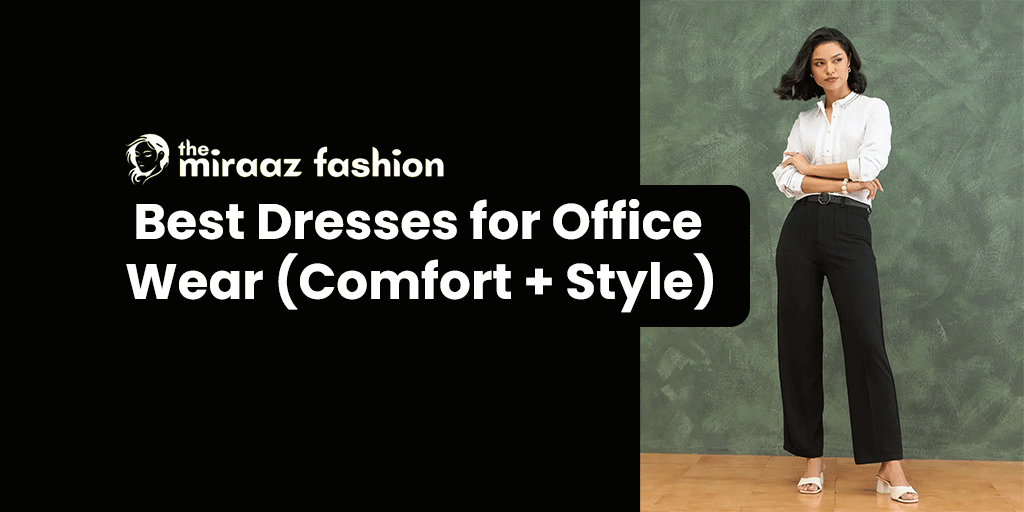

The best dresses for office wear are A-line, wrap, sheath, and shirt-style dresses in breathable fabrics like cotton, linen, or stretch blends, in neutral or deep tones such as navy, black, or grey. The right office dress should pass one simple test: if you can sit through a 3-hour meeting without adjusting it, it’s the right choice.
This guide covers which dress works for which body type, which fabric survives an 8-hour workday, and how to build a small office wardrobe that never feels repetitive — without spending on 10 different outfits.
Why Your Office Dress Choice Actually Affects Your Work
Here’s what most people don’t realise: discomfort is distracting, and distraction shows. A dress that’s too tight at the waist, a fabric that clings in an un-airconditioned cabin, or a hemline you keep tugging down in a meeting — all of these quietly pull your focus away from the actual work.
The right dress does the opposite. It’s forgettable on your body and memorable in the room — comfortable enough that you stop thinking about it, and put-together enough that it does the talking for you.
What Actually Changes When Your Office Dress Is Right
- You stop adjusting your outfit through the day — hands stay free for actual work
- You look consistent and polished in every meeting, planned or unplanned
- You appear more confident, because you are more comfortable
- You spend less time each morning deciding what to wear
1. What are the best dress styles for office wear?
Answer: The four most reliable office dress styles are the A-line, sheath, wrap, and shirt dress — each solves a different combination of comfort, formality, and body coverage.
| Style | Best for | Why it works |
|---|---|---|
| A-line dress | Almost every body type, all-day wear | Fitted at the top, flares gently below — moves freely without clinging |
| Sheath dress | Client meetings, formal presentations | Structured, polished, corporate-ready silhouette |
| Wrap dress | Long hours, fluctuating fit needs | Adjustable at the waist, forgiving and comfortable across the day |
| Shirt dress | Offices with a smart-casual dress code | Formal enough for work, relaxed enough to feel like off-duty wear |
If you’re building your first office wardrobe, start with an A-line dress — it’s the safest, most universally flattering starting point before you invest in the more structured styles.
If you love ethnic silhouettes over Western dresses, a well-cut kurta can do the same job — Anarkali vs. Straight Kurta: Which Silhouette Suits Your Body Type explains which cut works best for daily office wear versus which one suits festive days.
2. Which fabrics are best for office dresses?
Answer: Cotton, linen, stretch-blend fabrics, and matte crepe are the best choices for office dresses because they balance breathability with a wrinkle-resistant, polished finish through long working hours.
- Cotton — breathable, ideal in non-AC offices or hot climates, but wrinkles faster
- Linen — lightweight and cool, best paired with a light iron-press before wearing
- Stretch blends (cotton-lycra, ponte) — allow easy movement through sitting, walking, and commuting without losing shape
- Polyester blends — durable and wrinkle-free, useful for travel-heavy work weeks
- Matte crepe — skims the body without clinging, holds structure through the day
Quick test before buying: Scrunch the fabric in your hand for 5 seconds. If it springs back with minimal creasing, it’ll survive a full office day.
Want a deeper fabric-by-fabric breakdown — including how each behaves in heat, humidity, and AC? Best Fabrics for Summer Dresses: Cotton vs Satin vs Chiffon covers this in detail.
3. Which office dress suits your body type?
Answer: Pear-shaped bodies look best in A-line dresses, apple-shaped bodies in empire-waist dresses, hourglass shapes in wrap or sheath dresses, and rectangle shapes in belted or structured dresses that add definition.
| Body type | Recommended style | Why |
|---|---|---|
| Pear-shaped | A-line dress | Balances wider hips with a flared hem, keeps proportion even |
| Apple-shaped | Empire-waist dress | Fitted just below the bust, skims the midsection |
| Hourglass | Wrap or sheath dress | Follows and highlights the natural waist |
| Rectangle | Belted or structured dress | Adds waist definition where the silhouette is naturally straight |
Simple rule: Try one style from each category once. The one that needs the least adjusting through the day is usually the one built for your shape.
For a deeper breakdown of exactly how cut, colour, and neckline choices affect how slim and proportionate you look in any dress — office or otherwise — see How to Look Slim in Dresses: 12 Styling Tips That Actually Work.
4. Which colours work best for office wear?
Answer: Navy, black, grey, and muted pastels are the most reliable office wear colours — each communicates a slightly different professional tone, and choosing the right one for the occasion matters as much as the dress style itself.
| Colour | Perceived tone | Best used for |
|---|---|---|
| Black | Authority, power | Leadership meetings, presentations |
| Navy blue | Trust, reliability | Client meetings, first impressions |
| Grey | Neutral, balanced | Everyday wear, mixed-team meetings |
| Pastels | Approachable, calm | Internal team days, informal reviews |
Practical tip: Keep 2–3 neutral-coloured dresses as your base wardrobe — they mix easily with blazers, belts, and accessories, and never look repetitive even if worn often.
5. How should office dressing change by season?
Answer: Summer office wear should prioritise light, breathable fabrics; winter should layer with structured blazers in darker tones; monsoon should avoid long hemlines and prioritise quick-dry fabrics.
Summer:
- Cotton or linen fabrics
- Sleeveless or short-sleeve cuts
- Light, breathable colours
Winter:
- Layer with a tailored blazer or structured jacket
- Slightly heavier fabrics — ponte, wool-blend
- Deeper tones — maroon, forest green, charcoal
Monsoon:
- Avoid ankle-length hemlines that trail or absorb water
- Quick-dry synthetic or poly-blend fabrics
- Closed, water-resistant footwear over open sandals
For seasonal styling in cotton specifically, How to Style a Cotton Frock in Summer 2026 (5 Fresh Looks) has five ready-to-copy looks.
6. What accessories elevate a simple office dress?
Answer: Minimal jewellery, a structured handbag, comfortable block heels or flats, and a smart belt are the four accessories that take a plain office dress from basic to polished — without adding visual clutter.
- Minimal jewellery — a single statement piece (watch, stud earrings) reads as more professional than layered jewellery
- Structured handbag — holds shape through the day, signals put-together over casual
- Comfortable heels or flats — block heels balance height and comfort; flats work in fast-paced, high-movement roles
- Smart belt — instantly adds waist definition to a loose or A-line dress
Example combination: A plain black sheath dress + thin belt + structured tote + minimal gold studs = a complete, meeting-ready look in under two minutes.
7. What are the most common office dressing mistakes?
Answer: The most common office-wear mistakes are choosing overly tight or short dresses, prioritising trend over fabric comfort, ignoring the workplace’s dress code, and over-accessorising a already-detailed dress.
- Too tight or too revealing — restricts movement, shifts focus away from your work
- Wrong fabric for the setting — synthetic blends in a non-AC office lead to visible sweating and discomfort
- Ignoring dress code — a beautifully styled dress still misses the mark if it doesn’t match workplace norms
- Over-accessorising — pairing a printed or embellished dress with heavy jewellery competes for attention instead of adding polish
The sit test: Before buying any office dress, sit down in the trial room for a full minute. If the fabric pulls, the hem rides up, or the waist digs in — skip it, no matter how good it looks standing.
8. How do you build a capsule office wardrobe?
Answer: A functional capsule office wardrobe needs 2–3 neutral dresses, 1 formal dress, 1 casual office dress, and 1 blazer — this combination alone can create over a dozen distinct outfit combinations without buying anything new.
| Piece | Quantity | Purpose |
|---|---|---|
| Neutral dresses (black/navy/grey) | 2–3 | Daily rotation base |
| Formal dress | 1 | Client meetings, presentations |
| Casual office dress | 1 | Internal days, relaxed dress codes |
| Blazer | 1 | Layer up any dress instantly for a formal meeting |
Budget tip: One well-made neutral sheath dress can be restyled at least five different ways — swap the belt, footwear, jewellery, and blazer combination each time, and it never repeats the same look twice.
For a real example of exactly how one dress can be restyled multiple ways through the week, see How to Style One Dress in 5 Different Ways — Smart Fashion Guide for 2026.
Prefer building your capsule around kurta sets instead of Western dresses? 10 Ways to Style a Kurta Set for Every Occasion shows how one set can cover office, casual, and festive days.
FAQs: Best Dresses for Office Wear
Q: What is the most comfortable dress style for a full office day? A: A-line and wrap dresses are the most comfortable for full working days because they allow free movement while staying fitted enough to look professional.
Q: What colour dress is best for a client meeting? A: Navy blue is widely considered the best colour for client meetings, as it’s perceived as trustworthy and confident without the harshness of black.
Q: Which fabric is best for office wear in summer? A: Cotton and linen are the best fabrics for summer office wear because they’re breathable and help regulate body temperature through the day.
Q: How many dresses do I need for a basic office wardrobe? A: A functional capsule office wardrobe needs about 5 pieces — 2–3 neutral dresses, 1 formal dress, and 1 casual dress — paired with a single blazer for versatility.
Q: How do I know if an office dress is the wrong fit? A: Sit down in it for a full minute before buying. If the fabric pulls at the waist, the hem rides up, or you feel the need to adjust it while seated, it’s the wrong fit.
Q: Are wrap dresses appropriate for formal office settings? A: Yes, wrap dresses are appropriate for most formal office settings — they’re structured enough to look polished while remaining adjustable and comfortable for long hours.
Final Word
The best dresses for office wear aren’t the most expensive or the most trend-forward — they’re the ones you forget you’re wearing by 2 pm. Start with one A-line dress in a neutral tone, check it against the sit test, and build outward from there. Comfort and professionalism were never in conflict — they just need the right fabric, cut, and colour working together.
Explore more styling guides:
- Anarkali vs. Straight Kurta: Which Silhouette Suits Your Body Type
- 10 Ways to Style a Kurta Set for Every Occasion
- How to Look Slim in Dresses: 12 Styling Tips That Actually Work
- Best Fabrics for Summer Dresses: Cotton vs Satin vs Chiffon
- How to Style One Dress in 5 Different Ways — Smart Fashion Guide for 2026
- How to Style a Cotton Frock in Summer 2026 (5 Fresh Looks)