
To look slim in a dress or kurta, focus on five things: define your waist, wear one dark or monochrome colour, choose a V-neckline, keep the outfit’s vertical line unbroken, and match your footwear to your skin tone. These five tricks control how the eye moves across your body — and that’s what creates a slimmer, taller-looking silhouette, regardless of your actual size.
Everything below explains the “why” behind each trick, so you can apply it to any dress, kurta, or kurta set you already own — not just copy a checklist.
Why Most “Look Slim” Advice Doesn’t Work For You
Most articles repeat the same three lines: wear dark colours, try a V-neck, pick vertical stripes. You’ve read this before. You’ve tried it before. And it still doesn’t always look right in the mirror.
The tips aren’t wrong — the explanation is missing. Once you understand the visual logic behind each rule, you stop guessing and start making choices that work for your specific body, your specific kurta or dress, and your specific occasion.
One more thing before you start: “looking slim” doesn’t mean looking like a different body. It means looking proportionate — balanced, elongated, put together. Every body type can achieve this with the same clothes already in the closet.
1. How do vertical and horizontal lines affect how slim you look?
Answer: Vertical lines make the eye travel up and down, which reads as height and slimness. Horizontal lines make the eye travel side to side, which reads as width.
This single rule is the foundation of almost every other tip in this guide.
- A center button placket or pintuck detailing running down a kurta creates a continuous vertical line → elongating.
- A wrap-style kurta creates a diagonal line at the front — and diagonal lines are read by the eye almost the same way as vertical lines → elongating.
- A wide, contrasting horizontal border at the hip or bust does the opposite — it draws the eye straight across your widest point.
What to avoid: Bold horizontal borders, patchwork, or contrast panels positioned exactly at the hip or bust line.
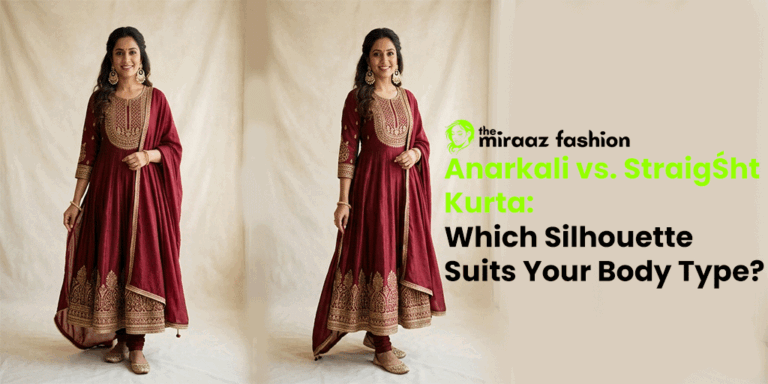
Not sure which silhouette works better for your body type? This comparison breaks down which cut naturally creates cleaner vertical lines: Anarkali vs. Straight Kurta — Which Silhouette Suits Your Body Type.
2. What is the single most effective way to look slim in a dress or kurta?
Answer: Defining your waist. A visually narrowed waist is read by the brain as an hourglass shape, and hourglass silhouettes are perceived as proportionate — independent of your actual measurements.
In Western dresses:
- Wrap dresses
- A-line dresses with a fitted bodice
- A thin belt worn over a flowy dress
In Indian ethnic wear (the part most women skip):
- Tuck just the front hem of a straight kurta into your waistband — no belt needed
- A thin fabric belt or rope-tie over a flowy kurta or frock adds shape without looking costume-like
- If you carry weight around the midsection, an empire-waist cut (fitted just below the bust, flowing after) creates the illusion of a waist at your slimmest point
What to avoid: Boxy, fully loose kurtas with zero waist definition. A shapeless garment adds visual bulk everywhere — it doesn’t hide anything, it amplifies it.
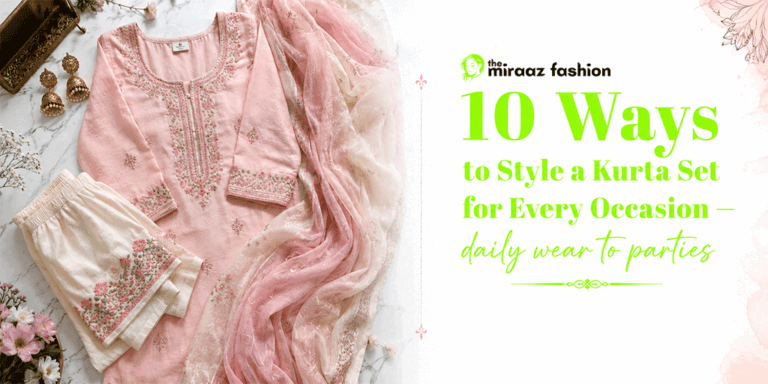
Want ready-made kurta set styling ideas that already work with waist definition built in? See 10 Ways to Style a Kurta Set for Every Occasion.
3. Which colours make you look slimmer?
Answer: Dark, deep colours — navy, bottle green, charcoal, burgundy, chocolate brown, plum — make you look slimmer because they absorb light and visually recede. Light colours reflect light and visually advance, making the body appear larger. This is physics, not opinion.
Smarter application:
- You don’t need head-to-toe black. Use dark colour strategically where you want to minimise, and lighter tones (like a dupatta) near the face to draw the eye upward.
- Deep jewel tones — emerald, royal blue, rust red, teal — look genuinely rich in Indian fabrics and do slimming work at the same time.
- Avoid light, high-shine fabrics like silk or satin in pale colours — the combination of light colour and reflective fabric doubles the visual expansion.
You can still wear pastels — just know that the same cut in a lighter shade will read slightly larger than in a darker one.
4. What neckline makes you look the slimmest?
Answer: A V-neck is the most universally slimming neckline. It creates a long vertical line down the center of the body, elongates the neck, and narrows the visual width of the shoulders.
| Neckline | Effect |
|---|---|
| V-neck | Elongates torso, narrows shoulders — works on almost every body type |
| Scoop neck | Softer version of V-neck, still elongating |
| Square neck | Adds width at the top — good for narrow shoulders, avoid if shoulders are already broad |
| High round/crew neck | Shortens the neck visually — avoid if you have a shorter neck |
| Sweetheart neckline | Adds width across the chest — flattering for smaller busts |
For Indian kurtas: Most come with a default round neck. Switching to a V-neck or U-neck kurta is a small design change with a noticeably elongating effect. For Anarkali frocks, choose necklines where embroidery sits at chest level rather than spreading into a wide yoke.
5. What dress or kurta length looks the slimmest?
Answer: A length that ends below your widest point — mid-thigh, midi, or maxi — looks slimmer than a length that cuts directly across your hip or knee.
- Worst length: Ending exactly at the widest part of the hip — it visually emphasises that width.
- Best daily-wear length: Just below the hip, at mid-thigh — covers the hip, reveals leg below, creates a visual break that adds height.
- Midi (below knee/mid-calf): Elongating and comfortable; pairs beautifully with block heels.
- Maxi/ankle-length: Creates the longest vertical line — best for height, especially with a slight heel.
- Avoid: Straight-silhouette, knee-length hems if you have wider hips or thighs — the hem lands right at your widest lower-body point.
6. Which fabrics are the most slimming?
Answer: Fabrics that skim the body without clinging or adding bulk — crepe, matte jersey, chiffon, georgette, cotton, and linen — create the cleanest, most slimming silhouette.
Best choices:
- Crepe / matte jersey — skims without clinging, ideal for fitted kurtas and straight frocks
- Chiffon / georgette — lightweight, flows away from the body, forgiving on curves
- Cotton / linen — natural structure without added bulk
Use with caution:
- Shiny satin/silk — sheen reflects light and reveals contours; opt for matte or dupioni silk instead
- Stiff brocade/jacquard — adds volume; great for festive drama, not for a streamlined look
- Thin, clingy polyester — clings to every contour and often shows underwear lines
7. How should you drape a dupatta to look slimmer?
Answer: Drape the dupatta so it creates a diagonal or vertical line across the torso — over one shoulder, or evenly across both shoulders — rather than letting it sit flat and wide like a shelf.
| Drape style | Slimming effect |
|---|---|
| Over one shoulder | Diagonal line from shoulder to hip — read as elongating |
| Both shoulders, hanging evenly | Two vertical fabric panels covering the midsection |
| As a neck stole | Frames the face, makes neck look longer |
| Tied at the waist | Instantly creates waist definition over a loose kurta |
Avoid: Heavy, stiff dupattas that sit off the shoulders like a shelf — they add horizontal width across the chest. A lightweight chiffon or soft cotton dupatta always drapes better.
8. Does wearing one colour actually make you look slimmer?
Answer: Yes. A monochrome outfit — one colour or a close tonal family from shoulder to feet — creates one unbroken vertical line, which the eye reads as height, and height reads as slim.
Breaking the outfit into contrasting sections (dark top, light bottom, different-toned shoes) creates three visually separate blocks, which shortens the silhouette.
Easiest way to apply this with Indian ethnic wear: Wear a kurta set exactly as it comes — matched, not mixed and matched with a contrasting bottom. A matching kurta set is already a monochrome outfit.
Curious how far one dress can stretch across different colour pairings and occasions? How to Style One Dress in 5 Different Ways — Smart Fashion Guide for 2026 breaks this down.
9. How does print placement affect how slim you look?
Answer: Large prints and prints placed at your widest point draw the eye directly to that area. Small-scale prints on a dark background recede visually and have a slimming effect.
- Scale: Small prints read as texture and recede; large, bold prints draw attention wherever they sit.
- Placement: A bold print at the hip pulls the eye to the hip. The same print at chest/shoulder level pulls the eye up.
- Background: A floral on a dark base recedes more than the same floral on white, because dark absorbs light and white reflects it.
Avoid: A single large, isolated motif placed directly at your widest point — it acts like a spotlight on the exact area you’re trying to minimise.
10. Which bottom wear makes a kurta look the most slimming?
Answer: Churidars and straight cigarette pants are the most slimming bottom options because they create a clean vertical line and reveal the ankle, adding a visual break that reads as height.
| Bottom wear | Effect |
|---|---|
| Churidar | Gathered ankle detail draws the eye down, elongating the leg |
| Straight/cigarette pants | Clean, slim line; shows ankle for a height break |
| Palazzo | Elongating only if full-length and lightweight; shortening if mid-calf and heavy |
| Flared/sharara | Adds lower-body volume — good for balancing wider hips, not for minimising |
One rule that’s easy to miss: Match fabric weight between kurta and bottom. A lightweight georgette kurta over heavy cotton palazzo looks unbalanced — similar weights create a unified silhouette.
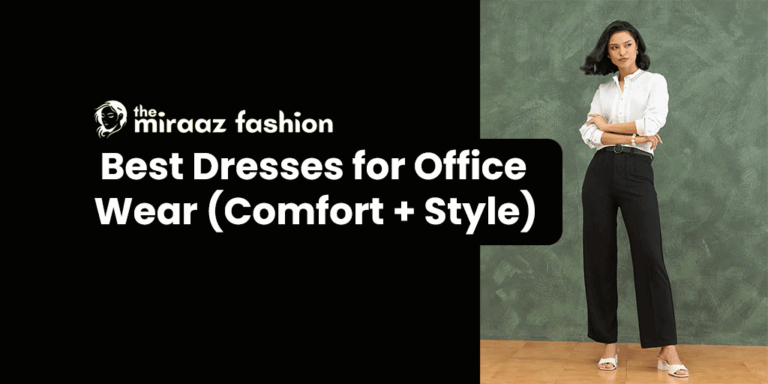
If you’re deciding what to build your everyday wardrobe around, Best Dresses for Office Wear (Comfort + Style) covers slimming, work-appropriate silhouettes in more depth.
11. Why does innerwear matter for looking slim?
Answer: Wrong innerwear undoes even the best-chosen dress or kurta by creating visible lines and bulges that no styling trick can fix.
- Visible panty lines: Seamless underwear in your skin tone — not shapewear, just seamless.
- Visible bra straps: A convertible or strapless bra for wide/low necklines; skin-tone (not white) for light fabrics.
- Sheer or thin kurtas: A cotton slip in your skin tone underneath prevents bunching and gathering.
- Shapewear: Light smoothing shorts work under fitted frocks; skip heavy compression under flowy Anarkalis or loose cotton kurtas — match shapewear level to garment snugness.
12. What footwear makes your legs look longer and slimmer?
Answer: Footwear in a colour close to your skin tone creates a continuous skin-to-floor line, which is the single most powerful footwear trick for making legs look longer.
What elongates:
- Nude/skin-tone footwear — continuous leg line
- Pointed-toe flats or heels — visually lengthens the foot and leg
- Block heels/wedges — add height comfortably, work well with flowy Indian wear
What shortens:
- Ankle straps with midi/maxi dresses — cuts the leg line with a horizontal strap
- Flat kolhapuris with a short kurta — comfortable, but don’t add height (fine with maxi lengths, where the garment itself elongates)
Quick occasion guide:
- Daily wear → tan flat kolhapuri
- Office → low block heel in nude/brown
- Festive → embellished block heels or juttis with a slight heel
- Maxi frocks → block wedge or strappy heeled sandals
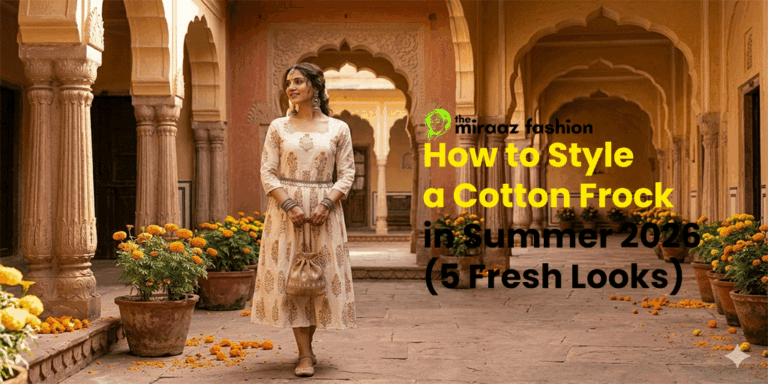
For fabric-specific footwear and styling pairings by season, see How to Style a Cotton Frock in Summer 2026 (5 Fresh Looks) and Best Fabrics for Summer Dresses: Cotton vs Satin vs Chiffon.
The 3 Changes With the Highest Impact (If You Only Do Three Things)
- Define your waist — front tuck, belt, or wrap style. Every single time.
- Go one shade darker in colour than you normally would.
- Match footwear to your skin tone or garment tone to keep the leg line unbroken.
These three alone — before necklines, prints, or fabric choice — make a visible difference.
FAQs: How to Look Slim in a Dress or Kurta
Q: What is the fastest way to look slimmer in any dress? A: Define your waist. A front tuck, thin belt, or wrap style instantly creates an hourglass impression, which reads as slim regardless of body size.
Q: Do dark colours really make you look slimmer? A: Yes. Dark colours absorb light and visually recede, while light colours reflect light and visually advance — making dark shades appear smaller on the body.
Q: Which kurta neckline is most slimming? A: A V-neck or U-neck kurta is the most slimming choice because it creates a vertical line that elongates the neck and torso.
Q: What kurta length should I avoid if I want to look slim? A: Avoid a length that ends exactly at the widest part of your hip — it visually cuts your body at its widest point. Mid-thigh, midi, or maxi lengths work better.
Q: Can prints make you look slimmer? A: Small-scale prints on a dark background can look slimming, since they read as texture and recede. Large, isolated prints at the hip or stomach do the opposite.
Q: Does footwear affect how slim your legs look? A: Yes. Nude or skin-tone footwear creates an unbroken line from leg to floor, visually elongating the leg more than any other footwear colour.
Q: How should I drape a dupatta to look slimmer? A: Drape it over one shoulder or evenly across both shoulders to create a vertical or diagonal line, instead of letting it sit wide and flat across the chest.
Final Word
Every tip above is a visual trick that guides the eye — none of them change your body, and none require a new wardrobe. Once you understand why a V-neck, a tucked-in front hem, or nude footwear works, you stop following a checklist and start making these choices automatically, with the clothes you already own.
Explore more styling guides:
- How to Style a Cotton Frock in Summer 2026 (5 Fresh Looks)
- Anarkali vs. Straight Kurta: Which Silhouette Suits Your Body Type
- 10 Ways to Style a Kurta Set for Every Occasion
- Best Dresses for Office Wear (Comfort + Style)
- Best Fabrics for Summer Dresses: Cotton vs Satin vs Chiffon
- How to Style One Dress in 5 Different Ways — Smart Fashion Guide for 2026