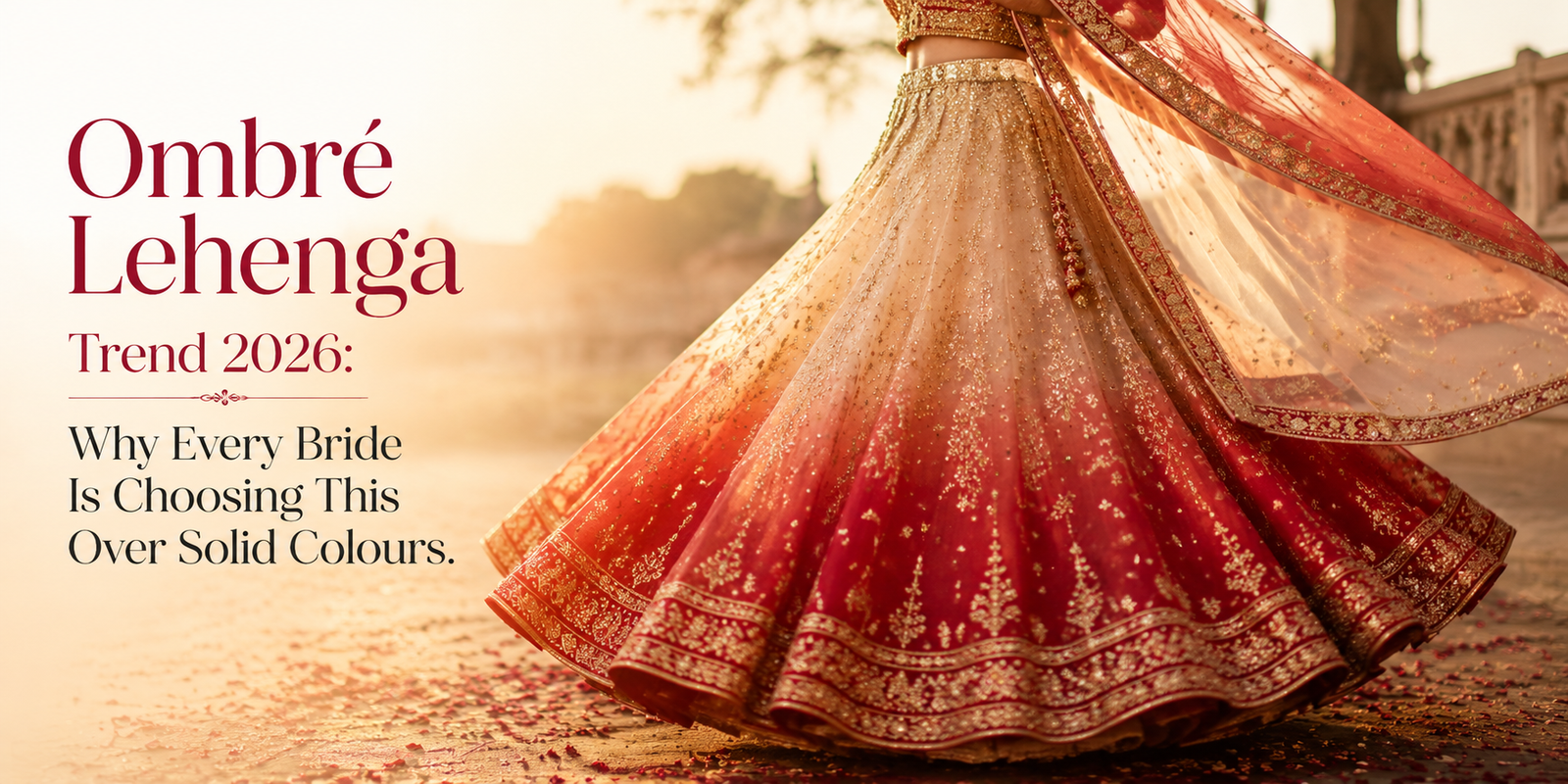

The ombré lehenga is 2026’s biggest bridal trend because it lets a bride wear multiple meaningful colours — like red fading into gold, or coral melting into blush — in a single flowing outfit, instead of committing to one solid shade. It photographs beautifully in daylight and golden-hour ceremonies, works across body types, and feels more personal than a traditional single-colour bridal lehenga.
Solid-colour bridal lehengas have dominated Indian weddings for decades — red for tradition, maroon for a safer bold choice, pastel for daytime functions. But 2026 is seeing a genuine shift. Brides are now choosing ombré lehengas — outfits where colour gradually transitions from one shade into another across the fabric — over committing to a single tone. If you’ve been scrolling wedding inspiration and keep landing on lehengas that seem to “glow” from deep red at the hem into soft gold near the waist, that’s the trend everyone’s talking about. This guide breaks down why ombré is taking over 2026 bridal fashion, which colour combinations are working best, how to style it for different wedding functions, and whether it’s actually the right choice for your big day.
What Is an Ombré Lehenga and Why Is It Trending in 2026?
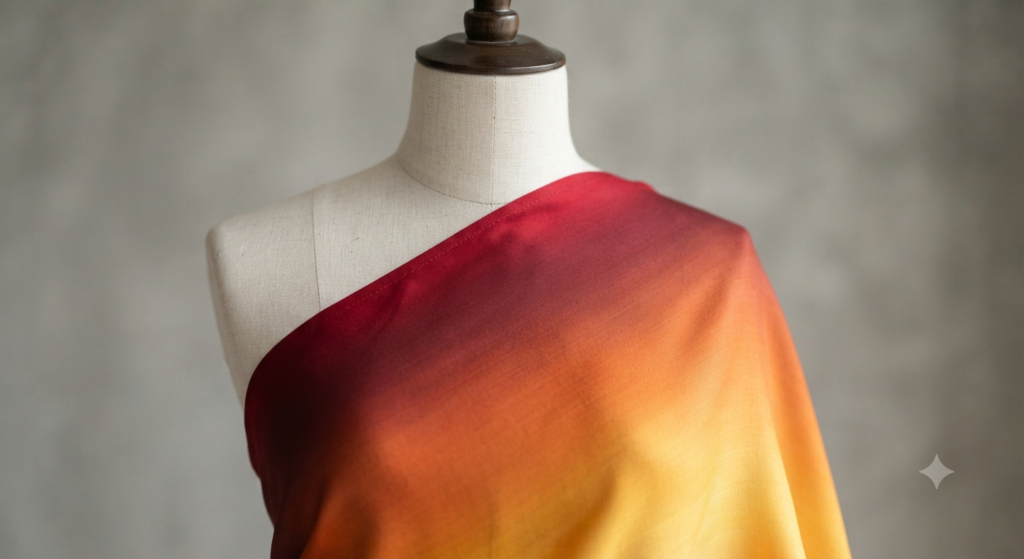
An ombré lehenga uses a gradual colour transition technique — usually achieved through hand-dyeing — where one shade smoothly blends into another across the length of the skirt, dupatta, or both. Unlike colour-blocking, which uses sharp, defined sections of colour, ombré creates a soft, blended gradient with no visible hard lines.
The technique itself isn’t new — dip-dyeing and gradient dyeing have existed in Indian textile traditions for generations — but 2026 has brought it firmly into bridalwear in a way it wasn’t before. A few reasons this shift is happening now:
- Symbolic colour storytelling: Ombré lets a bride wear two or three meaningful colours in one outfit — for instance, red (tradition) fading into gold (prosperity) — rather than choosing just one.
- Better performance in photography: Outdoor and golden-hour wedding ceremonies have become the norm, and gradient fabrics catch shifting natural light far more dynamically than a flat solid colour does.
- A shift toward personalised bridalwear: 2026 bridal trends overall are leaning toward individuality over convention, and an ombré lehenga instantly feels more custom than an off-the-rack solid shade.
For a bride planning an outdoor or daytime wedding specifically, this matters more than it might seem — a solid lehenga can look flat under harsh midday sun, while an ombré gradient shifts and catches light throughout the day.
Why Brides Are Choosing Ombré Over Solid Colours?
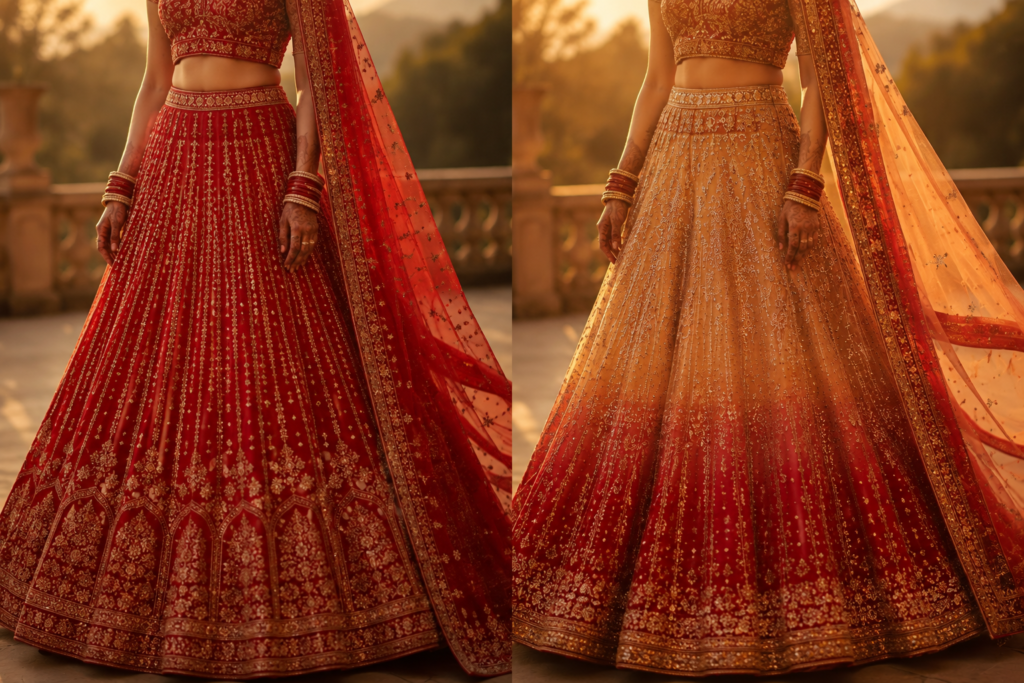
The move away from solid-colour bridalwear isn’t just an aesthetic preference — it solves a few real problems brides have had with traditional lehengas for years.
- One outfit, multiple colour moments — A solid red lehenga stays red in every photo. An ombré lehenga shifts in tone depending on light, angle, and time of day, giving a wedding album more visual variety without a single outfit change.
- Easier to coordinate with décor — Wedding décor in 2026 increasingly uses layered, multi-tonal colour palettes rather than one dominant shade. An ombré lehenga blends into these settings more naturally than a flat solid colour.
- Flattering across body types — The gradual colour transition, especially when the lighter shade sits at the waist and deeper tones flow toward the hem, naturally elongates the silhouette.
- Feels less “matchy” with bridesmaids and family — Solid red or maroon bridal shades often get unintentionally echoed by guests. An ombré combination is far harder to accidentally duplicate.
Bridal stylists are also noting that ombré works exceptionally well for brides who want to honour tradition (via a red or maroon base) while still wanting something that feels distinct and modern — which is really the core emotional pull behind this entire trend.
Best Ombré Colour Combinations for 2026 Weddings
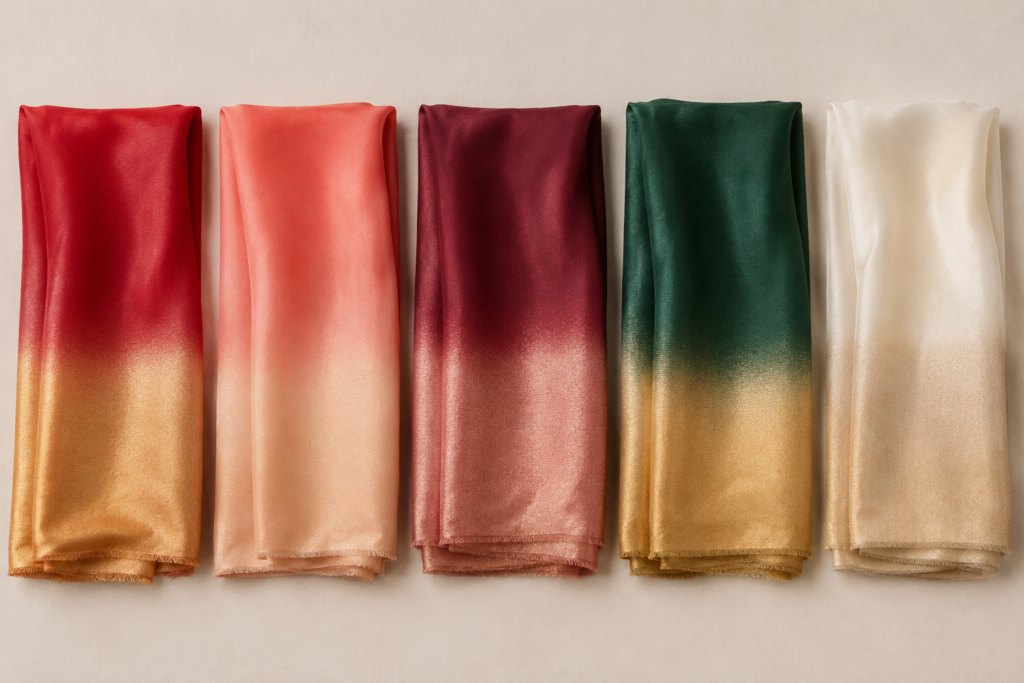
Not every ombré pairing works for every function or skin tone. Here are the combinations dominating 2026 bridal collections:
- Red into gold — The most traditional ombré combination, ideal for the main wedding ceremony. Keeps the ritual significance of red while adding warmth and shimmer through the gold gradient.
- Coral into blush pink — A softer, daytime-friendly combination that’s become especially popular for mehendi-to-wedding transition looks and outdoor golden-hour ceremonies.
- Wine into rose gold — A deeper, more dramatic pairing suited to evening receptions and winter weddings.
- Emerald into gold — Less traditional but rising fast in 2026, especially among brides who want a jewel-toned alternative to red without losing the festive richness.
- Ivory into champagne gold — Part of the broader 2026 shift toward lighter bridal shades; this combination pairs particularly well with heavy gold embroidery or Mukesh work.
If you’re unsure which pairing suits your skin tone, a simple rule holds up well: warmer undertones generally suit red-gold and coral-blush combinations, while cooler undertones tend to look striking in wine-rose gold or emerald-gold pairings.
Which Fabrics Work Best for Ombré Lehengas?
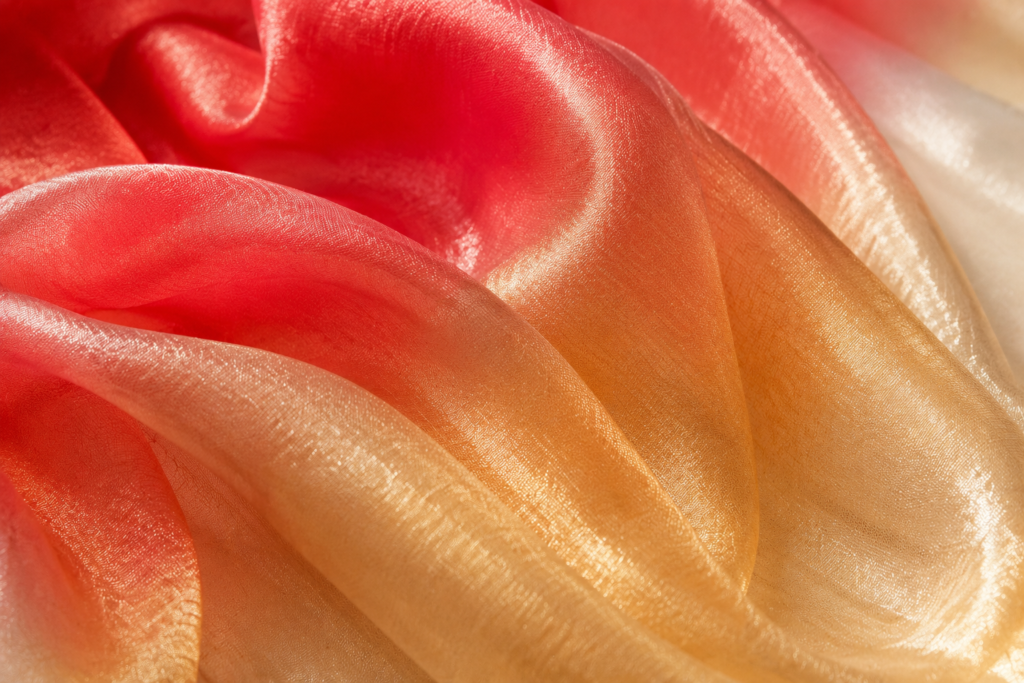
The fabric choice matters more for ombré than for solid-colour lehengas, because the dye needs to transition smoothly without patchiness, and the fabric needs to hold light in a way that shows off the gradient.
- Organza — The top choice for 2026 ombré lehengas. Its slight sheen and lightweight drape let the gradient shift visibly as the fabric moves, and it holds structure without excess weight.
- Chiffon — A softer, more flowing option, best suited to dupattas and lighter daytime ombré looks rather than heavily embellished bridal skirts.
- Silk blends — Add richness and are commonly used as a base layer beneath organza or net ombré overlays, giving the outfit both colour depth and structure.
- Net with embroidery — Frequently layered over an ombré silk base to add texture without overwhelming the gradient effect with too much embellishment.
A common mistake is choosing a fabric that’s too stiff or too heavily embroidered — dense embroidery can visually interrupt the gradient, making the transition look broken rather than smooth. For ombré specifically, less embellishment on the body of the skirt (and more focus on the border or blouse) tends to photograph better.
How to Style an Ombré Lehenga for Different Wedding Functions
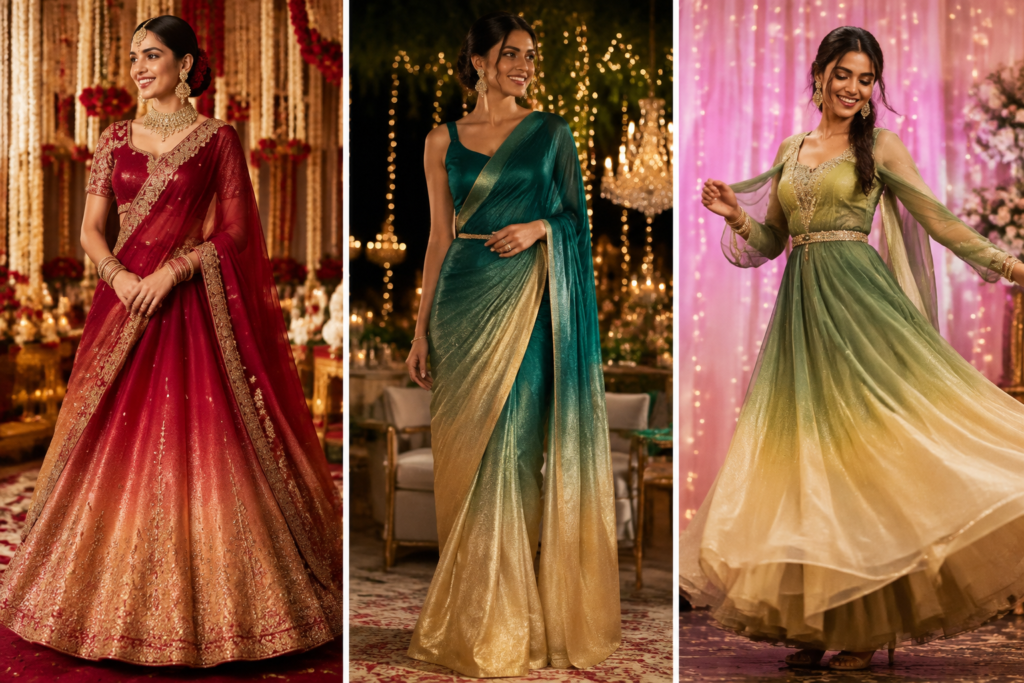
An ombré lehenga isn’t limited to just the main wedding ceremony — different gradient intensities work for different functions:
- Main wedding ceremony: Go with a bold, deep gradient — red into gold or wine into rose gold — paired with heavier traditional jewellery and a structured blouse.
- Reception: A lighter, more contemporary combination like emerald into gold or ivory into champagne works well here, especially with a deep-cut blouse or asymmetric drape.
- Sangeet: If you want ombré for sangeet specifically, choose a lighter-weight organza version so it moves freely while dancing, rather than a heavier silk-based bridal version.
- Family functions (like a suit-appropriate haldi-to-wedding transition day): Not every bridal event calls for a full lehenga — some brides prefer switching to a well-tailored traditional suit for smaller, more intimate family functions. If you want inspiration for blending traditional silhouettes with a modern finish for these in-between days, our Lakhnavi suit styling guide is a useful companion read — it covers exactly this kind of traditional-meets-modern balance that ombré bridalwear is also built around.
Thinking through which function needs which intensity of gradient — bold for the wedding, softer for daytime events — helps avoid over-ordering lehengas that end up looking too similar across your wedding week.
Ombré Lehenga vs Solid Lehenga: Which One Should You Choose?
| Factor | Ombré Lehenga | Solid Lehenga |
|---|---|---|
| Photography in natural light | Dynamic, shifts with light | Consistent but flat |
| Symbolic colour meaning | Can combine 2-3 meanings | Limited to one shade |
| Styling flexibility | Pairs well across skin tones | Depends heavily on undertone match |
| Traditional appeal | Modern take on tradition (if red-based) | Fully traditional |
| Cost | Often higher (hand-dye technique) | Generally more budget-friendly |
Quick Answer: Choose an ombré lehenga if you want a more personalised, photography-friendly outfit that still nods to tradition, and choose a solid lehenga if you prefer a classic, fully traditional look or are working with a tighter budget, since hand-dyed gradient techniques typically cost more than solid-dyed fabric.
Jewellery & Accessories That Pair Best with Ombré Lehengas
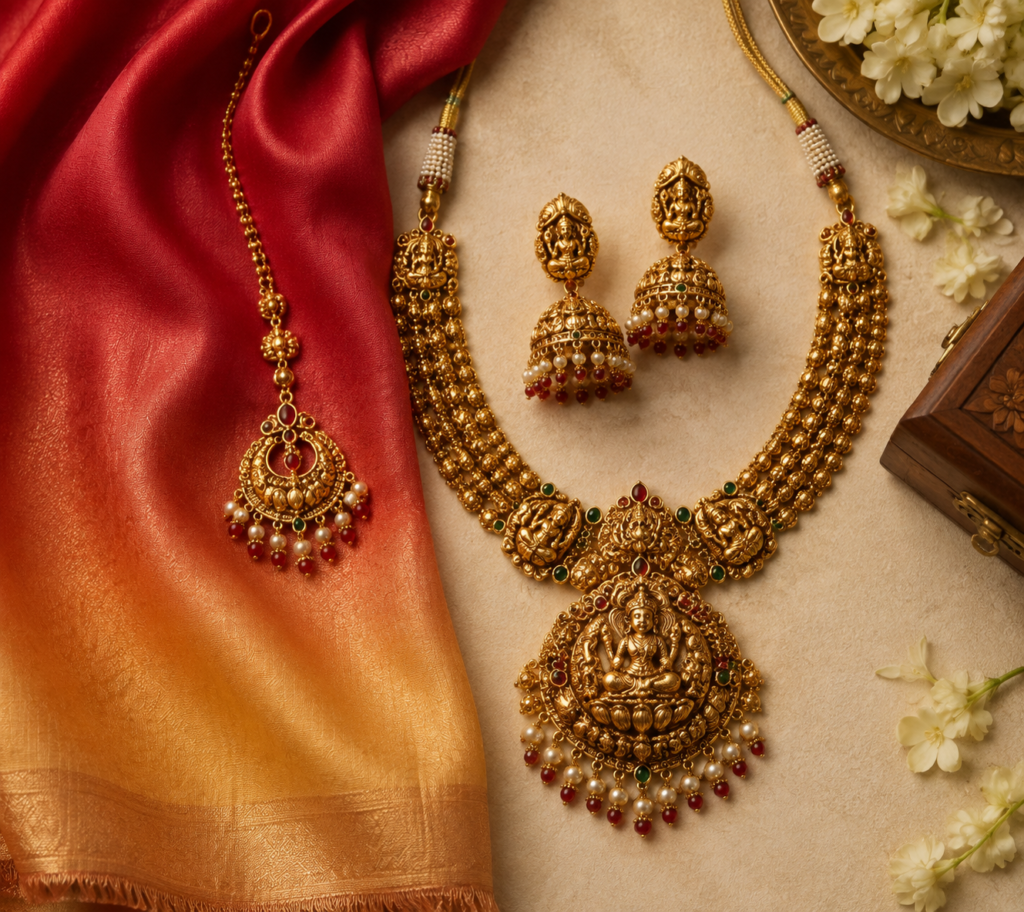
Because an ombré lehenga already carries visual movement through its colour transition, jewellery should complement rather than compete with it:
- Temple jewellery pairs beautifully with red-gold and ivory-champagne combinations, reinforcing the traditional side of the outfit.
- Polki or uncut diamond sets work well with cooler-toned ombré pairings like wine-rose gold or emerald-gold.
- Statement maang tikka helps anchor the look, especially when the lehenga itself has a softer, non-embellished gradient body.
- Minimal bangles over stacked sets are trending for ombré looks specifically, since heavier arm jewellery can visually clash with a fabric that already has a lot going on tonally.
The general rule stylists are following in 2026: if the lehenga’s gradient is bold and dramatic, keep jewellery classic and moderate. If the gradient is soft and pastel-based, jewellery can be more elaborate without overwhelming the overall look.
Common Mistakes to Avoid When Buying an Ombré Lehenga
- Choosing a gradient that’s too close in tone — If both colours are too similar (like two shades of pink), the transition barely reads in photos. A noticeable contrast between the two colours matters.
- Over-embellishing the skirt body — Heavy embroidery across the entire gradient can break up the smooth colour transition; let the fabric do the talking and save heavy work for the border or blouse.
- Ignoring your venue’s lighting — Indoor venues with warm artificial lighting can shift how an ombré gradient reads compared to outdoor daylight; if possible, view fabric swatches under lighting similar to your venue.
- Skipping a trial drape before the wedding — Because gradient placement varies by lehenga, always check where the colour transition falls when the skirt is worn, not just how it looks laid flat.
Frequently Asked Questions (FAQ)
Q: Is ombré lehenga suitable for a traditional wedding ceremony? A: Yes — red-into-gold and wine-into-rose-gold combinations keep the traditional colour significance intact while still giving a modern, gradient finish.
Q: What fabric shows off the ombré effect best? A: Organza is the top choice for 2026, since its light sheen and drape let the gradient shift visibly as the fabric moves.
Q: Are ombré lehengas more expensive than solid-colour lehengas? A: Generally yes — hand-dyeing techniques used to create a smooth gradient typically cost more than single-shade dyeing.
Q: Can I wear an ombré lehenga for both my wedding and reception? A: You can, but most brides choose a bolder gradient (like red-gold) for the wedding ceremony and a lighter one (like ivory-champagne or emerald-gold) for the reception to keep the two events visually distinct.
Q: What jewellery works best with an ombré lehenga? A: Temple jewellery and polki sets pair well, but the key rule is balance — bold gradients call for simpler jewellery, while softer gradients can carry more elaborate pieces.