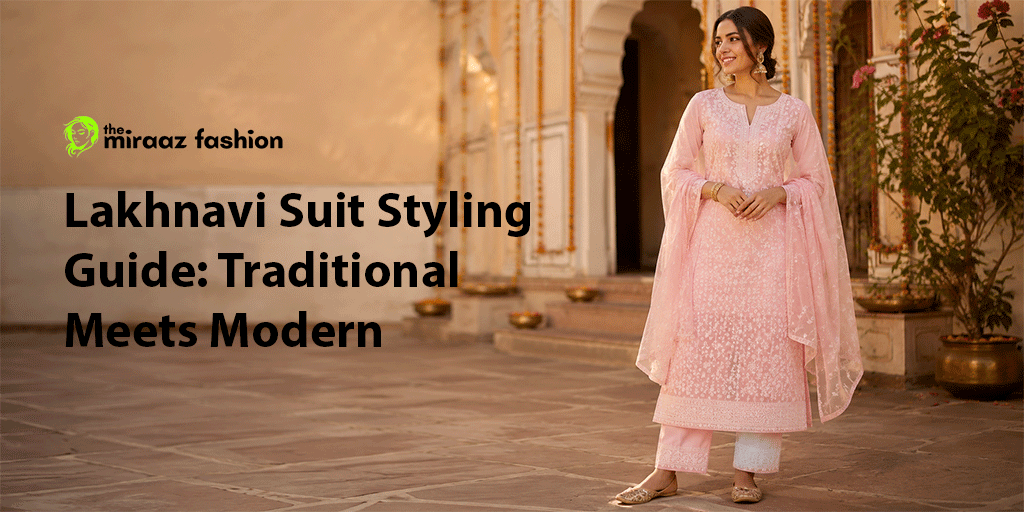

You have a Lakhnavi suit sitting in your wardrobe. Or you are thinking about buying one and you want to know whether it is actually versatile enough to justify the purchase.
Here is the honest answer: a well-chosen Lakhnavi suit is one of the most wearable and versatile pieces in Indian ethnic wear. It is not “only for Eid” or “only for weddings.” Depending on the fabric, embroidery density, and how you style it, the same Lakhnavi suit works for a weekday outing, an office function, a festive celebration, a dinner date, or a cousin’s wedding — with adjustments that take under five minutes.
What most women get wrong is not the suit itself. It is that they try to add too much to it. A Lakhnavi suit is already a statement. The styling principle is the opposite of what most outfits require: add less, not more.
This guide covers everything — from what a Lakhnavi suit actually is, to exact styling advice for every occasion, to the common mistakes that make a beautiful suit look wrong.
What Is a Lakhnavi Suit — and What Makes It Different From Other Embroidered Suits?
Direct Answer: A Lakhnavi suit is a salwar suit or kurta set featuring Chikankari embroidery — a traditional hand-embroidery craft originating from Lucknow, Uttar Pradesh. It is characterised by delicate floral and shadow-work stitching, typically done in white or pastel thread on soft fabrics like muslin, cotton, or georgette. What makes it distinct from machine-embroidered or printed suits is that each element of the design is individually hand-stitched — no two pieces are exactly alike.
The difference between Lakhnavi and other embroidered suits:
| Feature | Lakhnavi (Chikankari) Suit | Other Embroidered Suits |
|---|---|---|
| Embroidery type | Hand-stitched shadow work, floral motifs | Machine embroidery, zardozi, sequin work |
| Texture | Delicate, flat, subtle | Often raised, shiny, or heavily textured |
| Base fabric | Muslin, cotton, georgette, organza | Any fabric |
| Visual effect | Understated elegance | Often bold or heavily decorated |
| Occasion range | Casual to formal | Usually occasion-specific |
| Formality signal | Set by fabric and embroidery density | Set by embellishment type |
Traditional vs. modern Lakhnavi suits:
Traditional: White or cream base fabric with white thread embroidery. Worn with a matching white or cream dupatta. Classic, formal, and recognised as authentic Lucknowi craft.
Modern: Coloured base fabric — navy, sage green, soft pink, lavender, mustard, royal blue — with white or contrasting coloured chikankari embroidery. More wearable across everyday occasions and appeals to contemporary tastes without losing the craft’s identity.
Both are genuine Lakhnavi suits. The distinction matters for styling — which this guide covers in full.
How Do You Identify a Good Quality Lakhnavi Suit?
Direct Answer: A quality Lakhnavi suit has even, consistent stitch density throughout the embroidery, clean thread ends on the reverse side of the fabric, no skipped stitches or puckering in the base fabric, and embroidery that does not feel stiff or scratchy against skin.
What to look for when buying:
The embroidery on a quality chikankari suit is even — the density of stitching is consistent across the piece, with no areas that look rushed or sparse. When you hold the fabric to light, you can see the shadow effect of the thread work — this is where chikankari gets its name (“shadow work”). On the reverse side, thread ends are neatly finished, not loose or knotted.
The base fabric should feel soft and breathable — muslin and fine cotton in particular feel almost weightless. If the embroidery makes the fabric stiff or inflexible, either the thread density is too high for the fabric weight, or machine embroidery has been used on a marketed-as-handmade piece.
How to Style a Lakhnavi Suit for Daily Wear?
Direct Answer: For daily wear, choose a cotton or linen Lakhnavi suit in a pastel or soft colour with sparse, light embroidery. Pair with flat kolhapuris or simple leather chappals, skip heavy jewellery, keep the dupatta loosely draped over one shoulder or skip it, and carry a jute or cotton tote. The embroidery does the visual work — everything else should be quiet.
The one rule for daily wear Lakhnavi styling: The chikankari embroidery IS the accessory. You do not add more.
A white-on-white chikankari cotton suit with flat kolhapuris and a simple cloth bag is already a complete, beautiful look. Adding jhumkas, a necklace, and a formal dupatta on top of that creates visual noise — not visual interest.
Daily wear Lakhnavi suit — complete styling:
| Element | What to Choose | What to Avoid |
|---|---|---|
| Suit | Light cotton or mul cotton, sparse embroidery | Heavy georgette, dense embellishment |
| Colour | White, cream, pastel pink, sage green, powder blue | Very dark tones (save for formal occasions) |
| Footwear | Flat kolhapuris, simple leather chappals | Block heels, embellished sandals |
| Bag | Jute tote, simple canvas bag | Formal clutch, potli bag |
| Jewellery | One small gold stud OR thin gold chain — not both | Jhumkas, layered necklaces, bangles |
| Dupatta | Loosely draped over one shoulder, or skipped | Heavily pinned, formal drape |
| Hair | Simple bun, plait, or loose ponytail | Full blowout |
Fabric note for daily wear: Mul cotton and fine cotton Lakhnavi suits are the most practical for daily Indian summer wear. They are lighter than regular cotton, breathe exceptionally well, and the embroidery remains crisp through a full day of wear. Georgette Lakhnavi suits wrinkle more easily and are better saved for occasions where you aren’t moving around as much. For the complete guide on which fabrics work best in Indian summer heat — including how cotton, georgette, and chiffon compare in breathability and comfort — read the summer fabric guide for Indian women.
How to Style a Lakhnavi Suit for Office?
Direct Answer: For office, choose a straight-cut Lakhnavi kurta in a structured fabric (georgette or cotton blend) in a solid colour — navy, teal, sage, or dusty rose. Pair with cigarette pants or a straight palazzo, block heels or ethnic pointed flats, a structured handbag, and one small piece of jewellery — studs or a thin chain only. Pin the dupatta neatly across one shoulder.
Why Lakhnavi suits work particularly well for office:
The chikankari embroidery on a well-chosen Lakhnavi suit reads as elegant and refined, not decorative or festive. Unlike heavy zardozi or sequin-work suits, chikankari communicates sophistication without effort. In professional settings — corporate offices, educational institutions, client-facing roles — a plain cotton or georgette Lakhnavi suit in a structured silhouette is genuinely appropriate.
The colour-formality equation for office Lakhnavi:
- Pastels (blush, mint, lavender) — appropriate for creative, education, or wellness sectors. Less suitable for strict corporate settings.
- Mid-tones (dusty rose, powder blue, sage green) — most versatile for most office environments.
- Deep tones (navy, forest green, teal, burgundy) — most formal; work in all professional settings including corporate and government.
- White or cream — clean and polished; works in most offices unless you are concerned about maintenance through a full workday.
Office look — complete styling:
| Element | What to Choose |
|---|---|
| Suit cut | Straight kurta with cigarette pants or straight palazzo |
| Fabric | Georgette, cotton blend, or soft cotton |
| Footwear | Low block heels or pointed ethnic flats |
| Bag | Structured leather or fabric handbag |
| Jewellery | One item only — thin gold chain or small studs |
| Dupatta | Neatly pinned across one shoulder |
If you want a broader view of which ethnic outfits — including Lakhnavi suits and kurta sets — work best in Indian professional settings, the office wear guide for Indian women covers this in full detail.
How to Style a Lakhnavi Suit for Eid?
Direct Answer: For Eid, wear a Lakhnavi suit in a rich, festive colour — deep emerald, royal blue, raspberry pink, or warm gold — in georgette or organza fabric. Add gold jhumkas and a matching bangle set, embellished juttis, a carefully draped dupatta in a contrasting or matching silk, and bold Eid makeup — kohl, highlighted cheekbones, a bold lip.
Eid is the occasion Lakhnavi suits were made for:
Lucknawi Chikankari has been the preferred outfit for Eid celebrations in North India for generations. It is festive without being heavy, traditional without being stiff, and elegant without requiring jewellery overload — which makes it practical for a full day of celebrations, visiting, and gatherings.
Colour guide for Eid:
| Colour | Why It Works for Eid |
|---|---|
| Deep emerald green | Traditional Eid colour, photographs beautifully |
| Royal blue | Rich, festive, universally flattering |
| Raspberry or fuchsia pink | Celebratory, warm, works across skin tones |
| Warm gold or mustard | Festive, traditional feel |
| White with gold embroidery | Classic, elegant; works especially well for evening prayers |
| Lavender | Modern, feminine choice that stands out in a crowd |
Dupatta styling for Eid: For Eid specifically, a matching chikankari dupatta draped over the head for prayers and then loosely around the shoulders for gatherings is the most appropriate and elegant choice. A silk dupatta in a contrasting jewel tone adds a modern touch.
Eid makeup with Lakhnavi suit: Kohl-lined eyes are the most harmonious makeup choice with the delicate embroidery of a Lakhnavi suit. Add a statement lip — red, berry, or a warm nude — and the look is complete without competing with the chikankari work.
How to Style a Lakhnavi Suit for a Wedding Function or Family Ceremony?
Direct Answer: For wedding functions, choose a heavily embroidered georgette or organza Lakhnavi suit in a rich colour. Add layered gold jewellery — jhumkas, a choker or layered necklace, and bangles. Wear embellished juttis or block heels, carry an embroidered potli, and style hair in a formal updo. A bindi is appropriate and completes the festive look.
Occasion-specific advice:
Mehndi/Sangeet: Brighter, more playful colours — fuchsia, yellow, orange. Lighter fabric — georgette or chanderi. Hair loosely braided with flowers. Flat embellished juttis (you will be sitting on the floor and dancing). One bold colour of bangles — matching or contrasting.
Wedding guest (general function): Deep jewel tones — emerald, royal blue, plum, teal. Formal dupatta drape — pleated or pinned neatly. Block heels. Statement jhumkas with bangles. The Lakhnavi suit’s embroidery means you need less jewellery than you would with a plain georgette suit.
Formal family ceremony (tilak, godh bharai, etc.): White or cream traditional Lakhnavi suit with gold jewellery is the most graceful choice for more formal family rituals. It reads as respectful, elegant, and deeply traditional without being overdressed.
The jewellery rule for Lakhnavi suits at functions: Because chikankari is already a detailed, intricate embroidery, your jewellery should be statement pieces — not many small ones. One pair of large jhumkas and a matching bangle set is sufficient. Adding a full parure (earrings + necklace + maang tikka + nath + bangles + rings all at once) overwhelms the delicacy of the chikankari work.
How to Style a Lakhnavi Suit for a Date Night or Evening Out?
Direct Answer: For a date night, choose a Lakhnavi suit in a rich, deep colour — midnight blue, deep plum, wine red — in georgette or organza fabric. Skip the dupatta or carry a thin silk stole. Add strappy heels or metallic block sandals, layered gold necklaces, small hoops, and a bold lip colour. Let the embroidery and the colour do the work — keep accessories elegant and minimal.
Why Lakhnavi suits are underused for date nights:
Most women associate Lakhnavi suits with traditional and religious occasions. This leaves a huge styling opportunity unused. A deep-coloured, well-fitted Lakhnavi suit in georgette is inherently romantic — the delicate embroidery catches light subtly, the fabric drapes beautifully, and the overall effect is elegant in a way most western dresses struggle to match.
The dupatta decision for evenings: Skipping the dupatta entirely is the single most effective way to make a Lakhnavi suit feel modern and contemporary for an evening occasion. The suit reads as a complete outfit on its own. A thin organza stole, loosely around one arm, is an elegant alternative if you prefer some coverage.
Complete evening look:
| Element | What to Choose |
|---|---|
| Colour | Midnight blue, deep plum, wine red, dark teal |
| Fabric | Georgette or organza — both catch light subtly |
| Dupatta | Skipped, or a thin silk/organza stole carried loosely |
| Footwear | Strappy heels or metallic block sandals |
| Bag | Small chain-strap bag or slim clutch |
| Jewellery | Layered gold chains + small hoops |
| Lip | Bold — terracotta, berry, or deep rose |
How to Style a Lakhnavi Suit in a Modern, Fusion Way?
Direct Answer: For a modern fusion look, pair a Lakhnavi kurta (without the suit bottom and dupatta) with straight-fit dark jeans or wide-leg trousers, white sneakers or block heel ankle boots, and minimal gold accessories. This combination retains the traditional craft and the elegance of chikankari while creating a completely contemporary, wearable everyday look.
The fusion principle for Lakhnavi kurtas:
The chikankari kurta top is the most versatile item in a Lakhnavi suit. When separated from the matching salwar and dupatta, it becomes a contemporary top that works with multiple bottoms.
Three modern pairings for a chikankari kurta:
1. Chikankari kurta + dark straight-fit jeans + white sneakers The most casual fusion look. Works for college, casual outings, and shopping trips. The traditional embroidery of the kurta is contrasted by the casualness of denim — the combination reads as young and contemporary. Rolled cuffs on the jeans and exposed ankle complete the proportion.
2. Chikankari kurta + wide-leg trousers + pointed-toe flats Smart casual. Works for a lunch outing, a casual creative office, or an art gallery visit. The flowy wide leg and the delicate kurta create a feminine, editorial silhouette. Keep jewellery minimal — stud earrings and a thin bracelet.
3. Chikankari kurta + cigarette pants + block heel mules The most polished fusion look. Works for a client meeting in a less-formal setting, a teaching or design role, or a semi-formal daytime event. This is the version where you carry a structured bag and wear one small gold piece.
Colour guidance for fusion looks: White chikankari kurta + white or cream trousers = monochrome minimal. Pastels on pastels = tonal. Deep coloured chikankari on dark jeans = contrast. All three work — the choice depends on how much the embroidery should stand out.
For the complete principle behind building multiple outfits from a single ethnic piece — including how one kurta can be restyled for five different occasions — the one outfit, five styling ways guide applies directly to chikankari kurtas.
Which Colour Lakhnavi Suit Should You Choose for Which Occasion?
Direct Answer: White or cream suits are most appropriate for traditional, religious, and formal daytime occasions. Pastels (blush, mint, lavender) work for daily wear, casual outings, and office. Deep jewel tones (emerald, navy, plum, teal) are best for festive functions and evenings. Bright colours (fuchsia, orange, yellow) are ideal for Mehndi and Eid celebrations.
Complete colour-occasion guide:
| Colour | Best Occasions | Avoid For |
|---|---|---|
| White / Cream | Puja, formal family ceremonies, Eid prayers | Heavy outdoor summer events (maintenance concern) |
| Pastel pink / blush | Office, brunch, casual outing | Very formal wedding functions |
| Sage green / mint | Daily wear, office, casual | Mehndi (too quiet for this event) |
| Powder blue / lavender | College, brunch, office | Puja (traditional settings prefer white or yellow) |
| Mustard / warm yellow | Haldi, Eid, Diwali, brunch | Office (reads as casual) |
| Deep emerald | Eid, wedding guest, evening | Daily wear (too formal) |
| Royal blue | Wedding guest, Eid, evening event | Temple or puja visit |
| Wine red / burgundy | Wedding guest, evening out, date night | Casual daily wear |
| Deep plum / purple | Evening event, cocktail function | Daily wear, Eid prayers |
| Fuchsia / bright pink | Mehndi, Haldi, Navratri, Eid | Office, formal ceremonies |
White and cream — the traditional vs. modern dilemma: Many younger women avoid white Lakhnavi suits because they associate white with funerals or mourning. In traditional North Indian culture, white chikankari is actually a festive, celebratory choice — associated with Eid, formal ceremonies, and weddings. This is a regional and generational difference worth understanding. In southern India, white has different cultural associations. Know your context.
Which Fabric Is Best for a Lakhnavi Suit — and When?
Direct Answer: The best fabric for a Lakhnavi suit depends on the occasion: mul cotton and fine cotton are best for daily and summer wear; georgette is best for semi-formal and office wear; organza and tissue are best for weddings and evening events; muslin is traditional and ideal for cooler seasons. Rayon cotton is a budget-friendly everyday option.
Fabric guide for Lakhnavi suits:
Mul cotton / Fine cotton: Most breathable. Ideal for Indian summers. Light, airy, and comfortable through a full day outdoors. Best for daily wear, casual outings, and college. Chikankari on mul cotton has a soft, textured look that reads as casual-elegant.
Georgette: Semi-formal. Drapes more gracefully than cotton — slightly fluid movement. Better for office, semi-formal occasions, and indoor events. Chikankari on georgette has a more polished appearance than on cotton. Wrinkles more easily than cotton in humid heat.
Organza: Crisp and slightly transparent. Luxurious appearance. Best for weddings, Eid, and evening events. The transparency requires a well-chosen inner — a cotton slip or matching camisole in skin tone underneath. Chikankari on organza catches light delicately.
Muslin: The original Lakhnawi fabric. Very soft, slightly sheer, historically the most prestigious. Excellent for formal occasions in cooler weather. Can be delicate — requires careful maintenance.
Rayon / Rayon cotton: Affordable and practical. Softer drape than pure cotton. Good for daily wear and routine outings. Not as breathable as pure cotton in peak summer, but comfortable in moderate temperatures.
Silk cotton / Silk blend: Slightly heavier. More structured. Best for winter festive occasions and cooler-weather events. A Lakhnavi suit in silk cotton worn in December in North India is both practical and beautiful.
For a more detailed comparison of how each fabric — cotton, georgette, chiffon, and satin — performs in Indian climate conditions across seasons, the complete summer fabric guide is the most detailed resource available.
What Accessories Go With a Lakhnavi Suit?
Direct Answer: The golden rule for Lakhnavi suit accessories is: one statement piece only. Because chikankari embroidery is already intricate and detailed, adding multiple bold accessories creates visual overload. Choose jhumkas OR a statement necklace — not both. Bangles are always appropriate. Keep everything else minimal.
Accessories by occasion:
| Occasion | Jewellery | Footwear | Bag | Dupatta |
|---|---|---|---|---|
| Daily wear | Small studs or thin chain | Flat kolhapuris | Jute tote | Loosely draped or skipped |
| Office | Thin chain or small studs | Block heels or ethnic flats | Structured handbag | Pinned to one shoulder |
| Casual outing | Oxidised silver studs | Block heel sandals | Wicker or potli bag | Over one shoulder |
| Eid / Festive | Jhumkas + matching bangles | Embellished juttis | Embroidered potli | Matching chikankari dupatta |
| Wedding guest | Jhumkas OR layered necklace | Embellished block heels | Embellished clutch | Formally draped |
| Date night | Layered gold necklaces + hoops | Strappy heels | Chain-strap bag | Skipped |
| Fusion look | Small studs only | Sneakers or block mules | Structured mini bag | Not applicable |
The specific jewellery that works best with chikankari:
Gold jhumkas — the most harmonious choice. The traditional character of jhumkas complements the handcraft of chikankari without competing with it.
Oxidised silver — works particularly well with white and pastel chikankari. The antique, artisanal quality of oxidised silver matches the handmade nature of the embroidery.
Kundan or polki — appropriate for wedding functions and heavy festive occasions. Keep to one piece — either earrings or a necklace.
Pearls — highly suitable for formal and religious occasions. The quiet elegance of pearls does not compete with chikankari.
What not to wear: Heavy, flashy, rhinestone-studded jewellery reads as jarring against the delicate craft of chikankari. Neon or bright costume jewellery in plastic creates a mismatch in material quality. Bold, chunky statement necklaces overpower the embroidery.
Which Body Type Suits a Lakhnavi Suit Best — and How to Choose the Right Cut?
Direct Answer: Lakhnavi suits are flattering across all body types because the chikankari embroidery creates visual interest that draws the eye to the craft rather than to specific body areas. However, the silhouette of the kurta — straight-cut, A-line, Anarkali flare — should be chosen based on body type, not based on the embroidery.
Body type guide for Lakhnavi suit silhouettes:
Apple shape (weight in midsection/upper body): Choose a straight Lakhnavi kurta in a slightly longer length — mid-thigh to knee. The embroidery should be concentrated at the neckline and chest, not at the waist or hip. Empire waist Lakhnavi kurta sets are particularly flattering because the fit ends at the slimmest point below the bust.
Pear shape (wider hips and thighs): A-line or flared Lakhnavi kurtas are the most flattering — the fabric skims over the hips without pulling. Look for chikankari with embellishment concentrated on the upper portion of the kurta, neckline, and yoke — this draws the eye upward. Pair with dark churidar or cigarette pants.
Hourglass: The most versatile shape for Lakhnavi suits — most silhouettes work well. Choose a kurta with a slightly fitted bodice that acknowledges the waist before flaring or falling straight below. Avoid completely boxy kurtas that erase the natural waist definition.
Rectangle (lean, straight frame): Anarkali-cut Lakhnavi suits are excellent for rectangle shapes — the flare adds visual curve and dimension. Choose Lakhnavi suits with more embroidery density or with embellished borders at the hem to add visual interest at the lower body.
Petite (under 5’3): Midi-length Lakhnavi kurtas work better than floor-length — the length is more proportionate to the frame. Vertical embroidery detail (running from chest to hem) elongates the silhouette. Pair with a slight block heel — even 2–3 cm adds visible height.
For a comprehensive breakdown of which kurta silhouettes — Anarkali vs. straight cut — flatter which body type, with measurement instructions, the Anarkali vs. Straight Kurta body type guide covers every shape in full detail.
For the visual principles behind looking more proportionate and slimmer in any ethnic outfit — including specific styling tricks that apply directly to Lakhnavi suits — the 12 tips for looking slim in Indian dresses is the most practical reference.
For a complete guide on choosing the right dress and kurta silhouette based on your body type from the ground up, read how to choose the perfect dress for your body type.
5 Common Mistakes to Avoid When Styling a Lakhnavi Suit
Direct Answer: The five most common Lakhnavi suit styling mistakes are: over-accessorising a heavily embroidered suit, wearing the wrong fabric for the weather, pairing mismatched formality levels between the suit and accessories, choosing the wrong dupatta weight, and wearing a wrinkled Lakhnavi suit without steaming.
Mistake 1 — Over-accessorising This is the most common mistake, and it happens because people treat a Lakhnavi suit like a plain outfit that needs embellishment. It does not. The chikankari IS the embellishment. Adding heavy jhumkas, a statement necklace, two sets of bangles, and a maang tikka all at once turns a refined look into a chaotic one. Choose one statement piece. Let the embroidery breathe.
Mistake 2 — Wearing georgette in peak summer outdoors Georgette Lakhnavi suits are beautiful but not practical for outdoor summer events in Indian heat. If you are attending an outdoor event in May–July — a garden party, a mehndi on the terrace, an afternoon Eid gathering — choose mul cotton or fine cotton, not georgette. The fabric visibly wilts in outdoor heat and becomes uncomfortable within an hour.
Mistake 3 — Mismatching formality between the suit and accessories A heavily embroidered formal georgette Lakhnavi suit with casual flat kolhapuris and a cotton jute bag reads as a mismatch. An everyday cotton chikankari kurta with a full set of formal gold jewellery and a beaded potli looks overdressed for casual settings. Match the formality of the suit to the formality of the accessories.
Mistake 4 — Wrong dupatta weight A heavy, stiff brocade or zari dupatta on a delicate chikankari suit overwhelms the embroidery and creates an imbalanced look. The dupatta should be lighter than or equal to the weight of the suit fabric. A chiffon or organza dupatta with a georgette Lakhnavi suit. A cotton or mul dupatta with a daily-wear cotton suit. A matching chikankari dupatta for festive occasions.
Mistake 5 — Wearing a wrinkled Lakhnavi suit Georgette, muslin, and cotton all wrinkle — georgette especially so. A wrinkled chikankari suit makes even the most beautiful embroidery look unkempt. Always steam (do not iron directly — direct ironing can flatten and damage the raised chikankari stitching) before wearing. Hang the suit in the bathroom while hot water runs to release light wrinkles if you don’t have a steamer.
Quick Reference: Lakhnavi Suit — Complete Styling Occasions at a Glance
| Occasion | Fabric | Colour | Footwear | Jewellery | Dupatta |
|---|---|---|---|---|---|
| Daily wear | Mul cotton, fine cotton | Pastels, white, sage | Flat kolhapuris | Small studs only | Loosely draped or skip |
| Office | Georgette, cotton blend | Navy, teal, dusty rose, sage | Block heels or ethnic flats | Thin chain or studs | Pinned to one shoulder |
| Casual outing | Cotton or rayon | Pastels or soft prints | Block heel sandals | Oxidised silver drops | Over one shoulder |
| Eid | Georgette, organza | Emerald, royal blue, fuchsia | Embellished juttis | Jhumkas + bangles | Matching chikankari dupatta |
| Mehndi / Haldi | Georgette, chanderi | Fuchsia, yellow, orange | Flat embellished juttis | Colourful bangles + jhumkas | Bright contrasting dupatta |
| Wedding guest | Organza, georgette | Deep jewel tones | Embellished block heels | Jhumkas OR necklace | Formally draped |
| Date night | Georgette, organza | Midnight blue, wine, plum | Strappy heels | Layered gold chains + hoops | Skip entirely |
| Winter festive | Silk cotton, muslin | Rich tones, traditional colours | Block heels or embellished juttis | Full gold set | Formal drape |
| Fusion / modern | Cotton, rayon | White, pastels, deep tones | Sneakers or block mules | Small studs only | Not applicable |
FAQ — People Also Ask
What is a Lakhnavi suit?
A Lakhnavi suit is a salwar suit or kurta set featuring Chikankari — a traditional hand-embroidery craft from Lucknow (Lakhnow), Uttar Pradesh. It is characterised by delicate floral shadow-work stitching on soft fabrics like muslin, georgette, or cotton. Chikankari is one of India’s oldest surviving textile crafts, known for its understated elegance and intricate hand-stitched motifs.
Is a Lakhnavi suit suitable for weddings?
Yes. A heavily embroidered Lakhnavi suit in a rich colour — emerald, royal blue, plum, or wine red — in georgette or organza is appropriate and elegant as wedding guest wear. It is particularly well-suited for daytime wedding functions, mehndi ceremonies, and family celebrations. For the main wedding or reception, choose a suit with denser embroidery and a more formal silhouette.
Can a Lakhnavi suit be worn to office?
Yes. A straight-cut Lakhnavi kurta in a structured fabric (georgette or cotton blend) in a professional colour — navy, teal, sage, or dusty rose — with cigarette pants and block heels is appropriate for most Indian office environments. Keep jewellery minimal — one small piece only — and pin the dupatta neatly or skip it.
What is the difference between Lakhnavi suit and chikankari suit?
They are the same thing. “Lakhnavi suit” refers to the geographic origin — suits made in or in the style of Lucknow (Lakhnow). “Chikankari suit” refers to the embroidery technique used — the distinctive hand-stitch shadow-work embroidery. All Lakhnavi suits feature chikankari embroidery; all chikankari suits are Lakhnavi in style. Both terms describe the same garment.
Which colour Lakhnavi suit is most versatile?
A sage green or powder blue Lakhnavi suit in cotton or georgette is the most versatile — it works for office, casual outings, semi-formal family events, and can be dressed up or down. White or cream is the most traditional and works for the widest range of Indian occasions but requires more maintenance. Deep navy is the most formal and works across office, evening, and function wear.
How do you care for a Lakhnavi chikankari suit?
Hand wash in cold water with a mild detergent, or dry clean for formal georgette and organza pieces. Do not wring — press out water gently and lay flat to dry. Never iron directly on the embroidery — it will flatten the stitches. Use a steam iron from a distance, or hang in a steamy bathroom. Store folded in muslin cloth rather than plastic to prevent moisture build-up.
What jewellery goes with a white chikankari Lakhnavi suit?
Gold jhumkas are the most harmonious choice with white chikankari — the traditional craft quality of the earrings complements the handmade embroidery. Oxidised silver earrings are a beautiful alternative for a more contemporary look. Pearls work well for formal occasions. Keep to one statement piece — earrings or a necklace, not both.
Can you style a Lakhnavi suit for a date night?
Yes. Choose a deep-coloured Lakhnavi suit in georgette or organza (midnight blue, wine red, deep plum), skip the dupatta entirely, add strappy heels and a small chain-strap bag, and finish with a bold lip colour. The delicate chikankari embroidery creates an elegant, romantic visual effect that works well for evening settings.
What is the best fabric for a Lakhnavi suit in summer?
Mul cotton and fine cotton Lakhnavi suits are the best choice for Indian summer heat. They are lightweight, breathable, and comfortable through a full day of outdoor wear. Georgette is suitable for indoor and semi-formal summer occasions where you aren’t exposed to direct heat for extended periods. Avoid heavy georgette and organza for outdoor summer events.
How is a Lakhnavi suit different from a regular salwar suit?
A regular salwar suit can be made in any fabric with any type of embellishment — printed, machine-embroidered, block-printed, or plain. A Lakhnavi suit specifically features Chikankari hand embroidery, which is done by skilled craftspeople using traditional stitching techniques. The embroidery is flat, delicate, and intricate — quite different from machine embroidery, which has a more uniform and raised appearance. The handmade quality of chikankari is what gives Lakhnavi suits their distinctive look and cultural value.
Related Reads
- Anarkali vs. Straight Kurta: Which Silhouette Suits Your Body Type? — Choose the right cut for your Lakhnavi suit based on your specific body shape
- 10 Ways to Style a Kurta Set for Every Occasion — The full occasion-wise styling guide that applies equally to Lakhnavi suit sets
- How to Look Slim in Dresses: 12 Styling Tips That Actually Work — Visual styling principles that make any ethnic outfit — including Lakhnavi suits — more flattering
- Best Fabrics for Summer Dresses — Cotton vs. Satin vs. Chiffon — Which fabric to choose for which season and occasion
- How to Choose the Perfect Dress for Your Body Type — Body type basics before choosing any kurta or suit silhouette
- How to Style One Outfit in 5 Different Ways — How to restyle the same Lakhnavi kurta for five different occasions
- Best Office Wear Dresses for Indian Women — Office-appropriate ethnic styling, including how Lakhnavi suits work in professional settings
- How to Style a Cotton Frock in Summer 2026 — If you prefer a frock silhouette, this guide covers cotton occasion styling for Indian summers