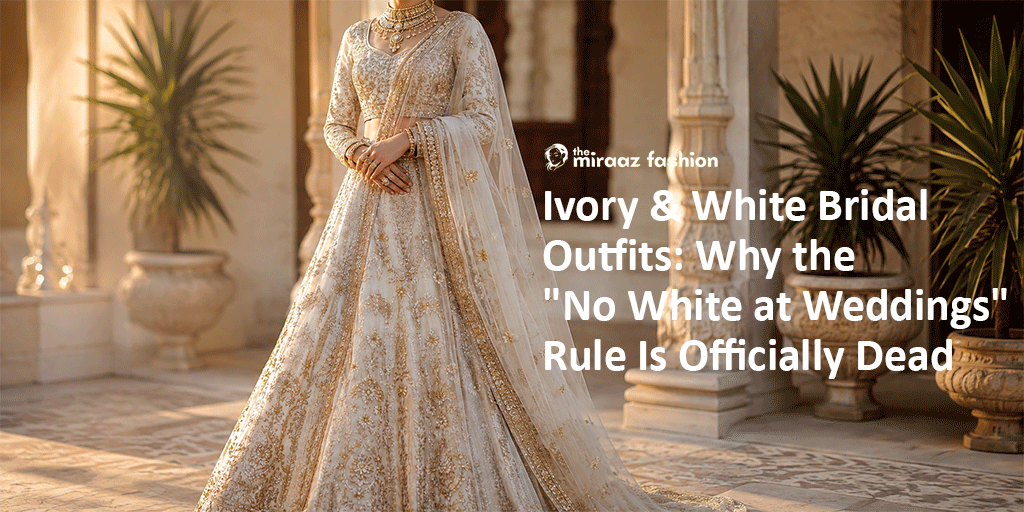

Ivory and white bridal outfits are one of 2026’s biggest bridal trends, with brides choosing soft ivory, champagne-white, and pearl-toned lehengas and sarees for their wedding functions — a shift away from the old belief that white is “inauspicious” or reserved only for mourning. When paired with gold embroidery, warm jewellery, and the right fabric, ivory reads as elegant and bridal, not somber.
For decades, Indian brides were told to avoid white outright — it was associated with mourning, considered inauspicious for a wedding, and generally left off the shortlist entirely. Walk into any bridal store today, though, and that rule has quietly stopped applying. Ivory, pearl, champagne-white, and soft off-white lehengas are now sitting front and centre in bridal collections, worn for mehendi, reception, and increasingly even the main wedding ceremony itself. This guide looks at why the shift happened, how brides are styling ivory without it looking “too plain” or funeral-adjacent, and how to actually pull it off for your own wedding.
Why Was White Considered Inauspicious for Indian Weddings?
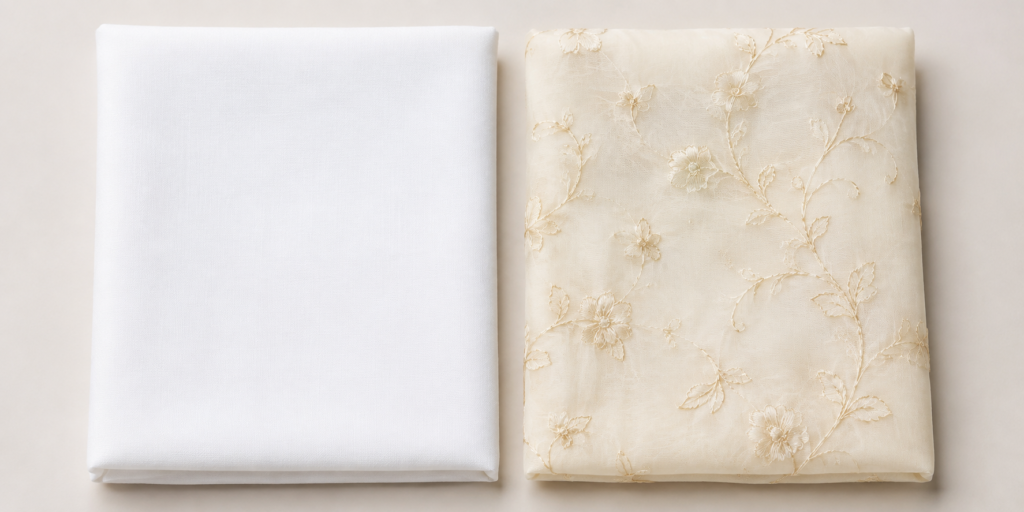
The “no white” rule wasn’t random — it came from a real cultural association. In much of North Indian tradition, plain white has historically been worn during mourning periods, which naturally made it feel wrong for a celebratory event like a wedding. Red, maroon, and other bold colours became the default bridal palette instead, symbolising prosperity, fertility, and auspiciousness.
That association hasn’t disappeared, but it’s softened considerably for a few clear reasons:
- Ivory is not the same as plain white. Most of what’s trending in 2026 isn’t stark white at all — it’s ivory, pearl, champagne, and off-white, which read as warm and celebratory rather than stark or funeral-associated.
- Destination and fusion weddings normalised it. Western-style wedding influences, especially from destination weddings, introduced white and ivory as elegant bridal options without the same cultural baggage.
- Gold embroidery changes the entire feel. A heavily embellished ivory lehenga with gold zari or Mukesh work doesn’t read as somber at all — it reads as regal, closer to a pearl or champagne finish than plain white.
In short, the rule hasn’t been broken so much as reinterpreted — brides aren’t wearing plain white the way it was culturally avoided; they’re wearing rich, embellished ivory tones that happen to sit in the same colour family.
Why Are Brides Choosing Ivory Over Traditional Red in 2026?
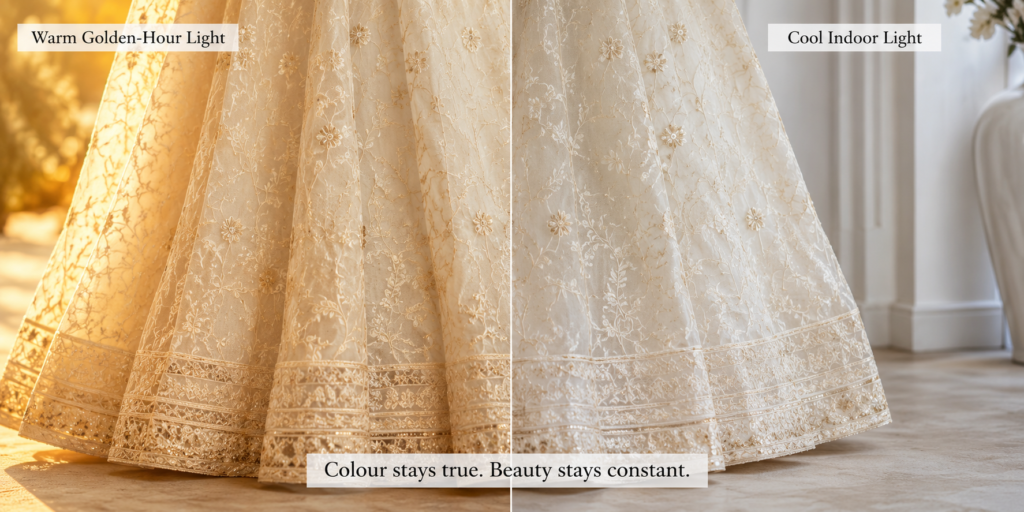
This isn’t just a passing aesthetic trend — there are practical and emotional reasons driving the shift:
- It photographs beautifully in every lighting condition. Unlike deep red, which can look almost black in low light or overly saturated in flash photography, ivory holds its tone consistently across daylight, golden hour, and indoor lighting.
- It pairs with any jewellery tone. Gold, kundan, polki, and even silver-toned jewellery all sit well against ivory, giving brides more flexibility than a bold red base allows.
- It feels personal rather than prescribed. A growing number of 2026 brides are choosing outfits based on what feels like “them” rather than defaulting to what tradition dictates — and ivory has become a symbol of that shift toward individual choice.
- It works across multiple functions without repeating. A single ivory base can be restyled with different jewellery, blouses, or dupattas for mehendi, reception, and even the wedding itself, whereas a bold red often gets “reserved” for just one event.
Bridal stylists are also noting that ivory tends to suit a wider range of skin tones evenly, since it doesn’t carry the same risk of clashing with undertones the way certain shades of red or maroon can.
Best Ivory & White Fabric and Embellishment Combinations
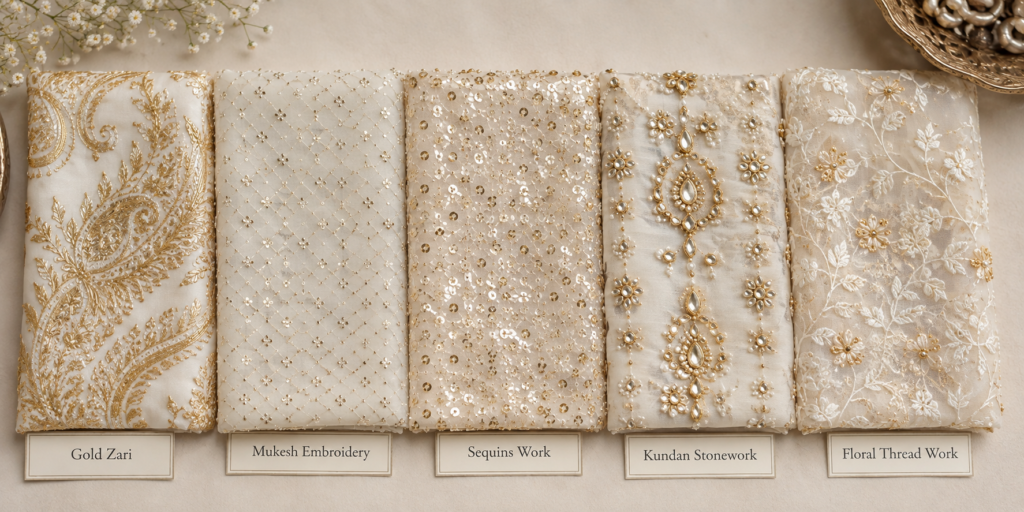
Not all ivory outfits are created equal — the fabric and embellishment choice makes the difference between “bridal elegance” and “looks like a plain white saree.”
- Ivory with gold zari work — The most traditional and popular 2026 combination; the gold thread work keeps the outfit rich and festive rather than plain.
- Pearl-white with Mukesh embroidery — A newer trend gaining traction, using delicate metallic thread embroidery that catches light without looking heavy.
- Champagne-white net with sequins — A more contemporary option, favoured for reception looks rather than the main ceremony.
- Ivory silk with kundan or stone work — Adds visible texture and richness, making the outfit feel more substantial for a main wedding function.
- Off-white organza with floral thread work — A lighter, softer combination best suited to daytime or outdoor functions like a mehendi-to-wedding transition day.
A useful rule for brides worried about ivory looking “too plain”: the lighter the base fabric colour, the more embellishment it typically needs to feel bridal rather than everyday. A completely unembellished ivory outfit can easily look like daily formal wear rather than wedding attire.
How to Style Ivory & White for Different Wedding Functions
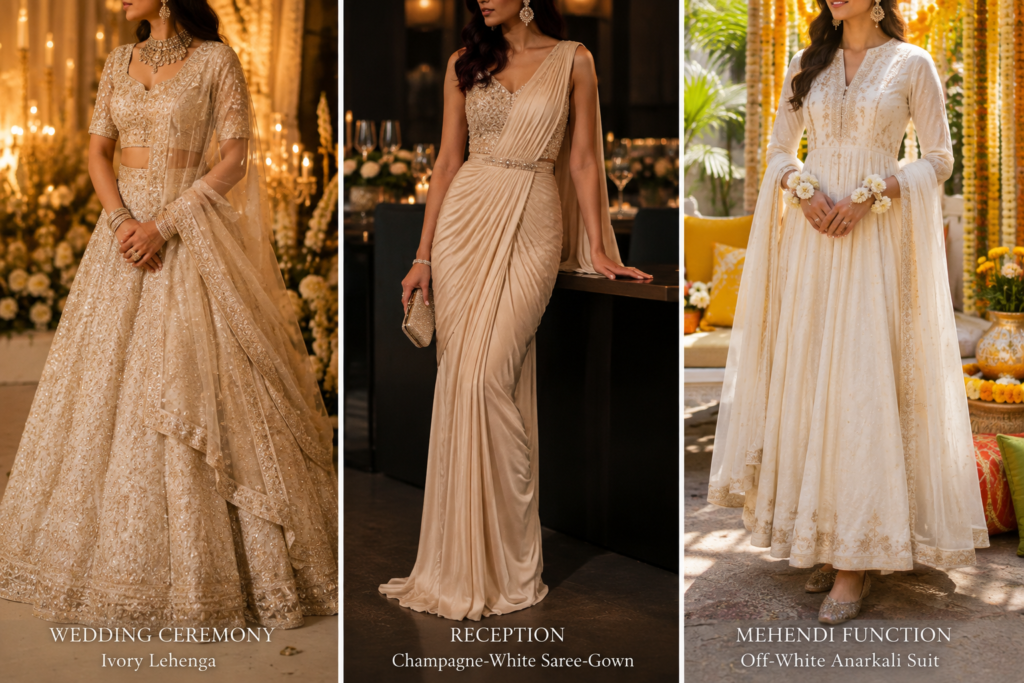
Ivory doesn’t have to be limited to just one event — different intensities and pairings work for different functions across a wedding week:
- Main wedding ceremony: Choose a heavily embellished ivory lehenga with gold zari or kundan work, paired with statement temple jewellery to keep the traditional weight of the outfit intact.
- Reception: A champagne-white or pearl-toned option with a more contemporary silhouette — like a fitted gown-style lehenga or a draped ivory saree-gown — works especially well here.
- Mehendi or daytime functions: A lighter off-white organza suit or ivory anarkali, paired with colourful jewellery (think coral or green stones) to add contrast against the pale base.
- Smaller family functions: Not every bridal event needs a full lehenga — for a haldi-to-wedding transition day or a small family gathering, a well-tailored traditional suit in ivory or soft pastel tones can work just as well. If you want inspiration on balancing a traditional silhouette with a more modern finish for these in-between days, our Lakhnavi suit styling guide covers exactly this kind of traditional-meets-modern approach, which pairs naturally with the softer, elegant tone ivory outfits are going for.
For brides planning a wedding during the monsoon or humid months specifically, fabric choice for ivory outfits matters even more than usual — lighter, breathable fabrics hold up better through long ceremony hours than heavier silk blends. Our guide on cotton kurta sets for monsoon comfort breaks down exactly which fabrics perform best in humidity, and the same logic applies directly if you’re choosing a lighter ivory outfit for a daytime or monsoon-season function.
Ivory vs Red: Which Should You Choose for Your Wedding?
| Factor | Ivory / White | Traditional Red |
| Cultural tradition | Newer, evolving acceptance | Deeply traditional, widely expected |
| Photography performance | Consistent across all lighting | Can look heavy or dark in low light |
| Jewellery flexibility | Pairs with gold, silver, kundan, polki | Best paired with gold and traditional sets |
| Skin tone versatility | Suits most undertones evenly | Can clash with certain cooler undertones |
| Family expectations | May need discussion with elders first | Rarely questioned |
Quick Answer: Choose ivory if you want a modern, photography-friendly outfit with jewellery flexibility, and choose red if traditional expectations matter most to your family or if you want zero risk of the outfit reading as anything other than clearly bridal.
Jewellery & Accessories That Pair Best with Ivory Bridal Outfits
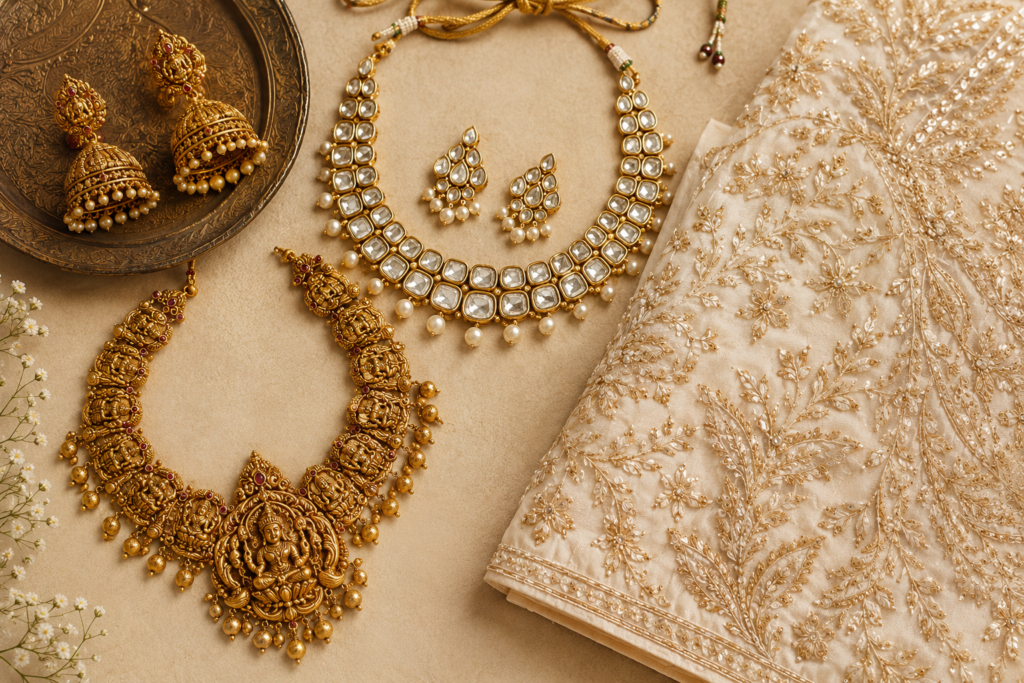
Because ivory is a lighter, more neutral base, jewellery plays a bigger role in signalling “this is a bridal outfit, not just a light-coloured outfit”:
- Temple jewellery in gold — The most reliable pairing; the warmth of gold against ivory keeps the look rich and unmistakably bridal.
- Kundan or polki sets — Add texture and visible craftsmanship, working especially well against a plain or lightly embellished ivory base.
- Layered necklaces — Popular for reception looks specifically, adding visual weight to balance the softness of a champagne-white outfit.
- Coloured stone accents (emerald, ruby, coral) — A growing 2026 trend where brides add one bold coloured jewellery piece against an ivory outfit for contrast, rather than staying fully neutral.
The general guidance stylists are following: the plainer the ivory fabric, the more jewellery should do the heavy lifting to keep the overall look festive and bridal rather than understated.
Common Mistakes to Avoid With Ivory & White Bridal Outfits
- Choosing a fabric that’s too plain or unembellished — Without embroidery, embellishment, or texture, ivory can easily read as everyday formalwear rather than bridal.
- Ignoring family conversations early — Since the “no white” belief is still held strongly by some older family members, it’s worth discussing the choice ahead of time rather than surprising anyone on the wedding day.
- Pairing with the wrong undertone jewellery — Rose gold and yellow gold both work with ivory, but silver-toned jewellery can sometimes wash out a very pale ivory base; it’s worth trying combinations before deciding.
- Wearing stark white instead of ivory or pearl tones — Pure white can still read as clinical or overly plain in photographs; ivory, champagne, and pearl tones almost always photograph warmer and more flattering.
- Skipping a lighting test before the big day — Ivory can shift in tone dramatically between daylight, tungsten indoor lighting, and flash photography, so it’s worth viewing the outfit under conditions similar to your venue.
Frequently Asked Questions (FAQ)
Q: Is it okay for an Indian bride to wear white at her wedding? A: Increasingly, yes — especially in ivory, pearl, or champagne-white tones with gold embellishment, which read as celebratory rather than the plain white historically associated with mourning.
Q: What’s the difference between ivory and plain white in bridalwear? A: Ivory has a warm undertone and typically comes paired with gold or metallic embellishment, while plain white is cooler-toned and can look stark or clinical without embellishment.
Q: Will my family object to an ivory wedding outfit? A: Some older family members may still associate white with mourning traditions, so it’s generally worth discussing the choice ahead of time rather than assuming it will be accepted without conversation.
Q: What jewellery works best with an ivory lehenga? A: Gold temple jewellery and kundan or polki sets pair most reliably, since the warmth of gold keeps the overall look bridal rather than plain.
Q: Can ivory be worn for the main wedding ceremony, or only for pre-wedding functions? A: It can be worn for the main ceremony too, provided the outfit carries enough embellishment — gold zari, kundan, or heavy embroidery — to keep it visually rich rather than understated.