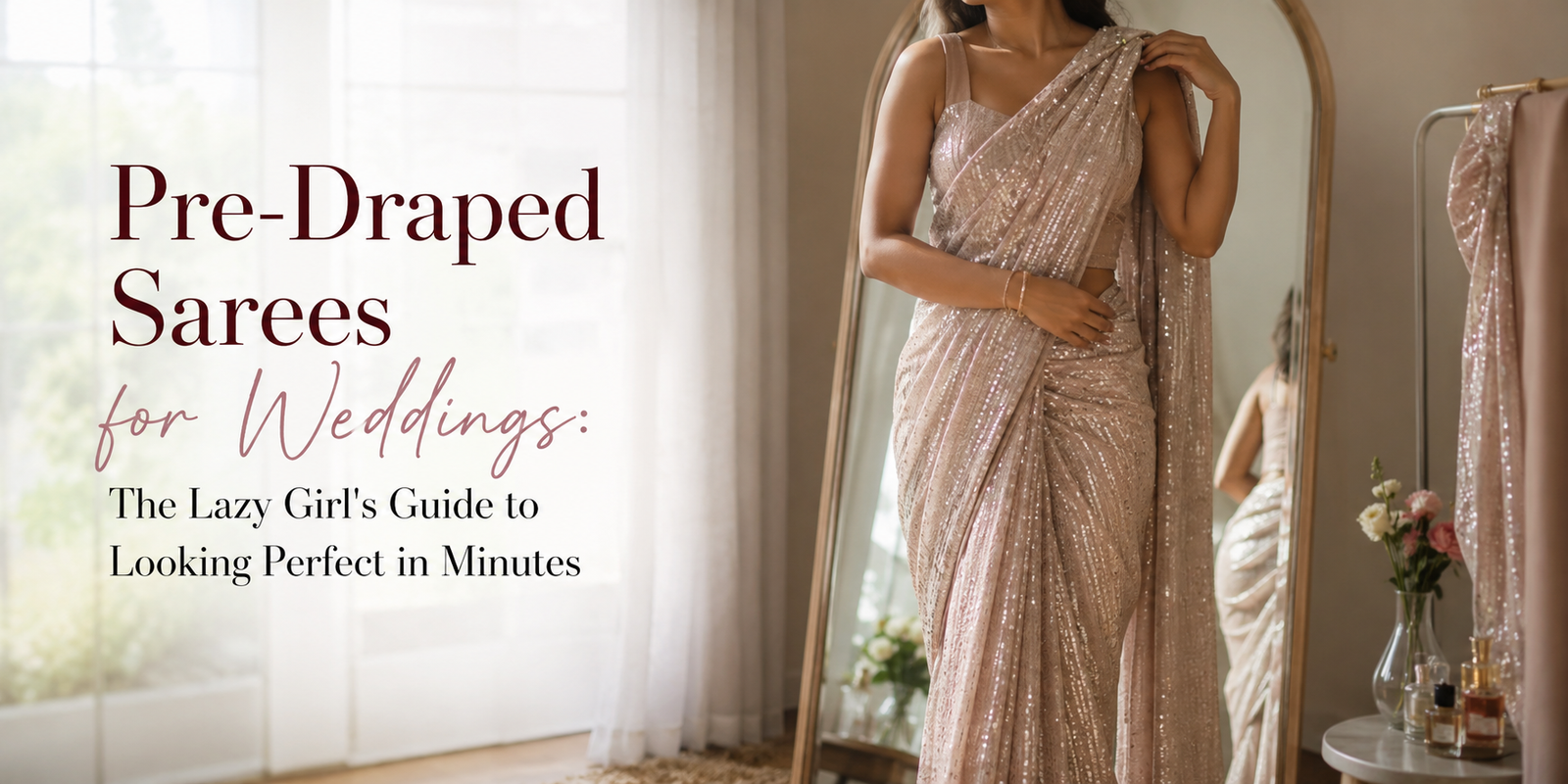

A pre-draped saree comes with the pleats and pallu already stitched into shape, so you simply step in, secure it at the waist, and pin the pallu — no draping skills or extra 30 minutes required. It’s become a go-to for wedding guests and even brides for pre-wedding functions because it delivers the traditional saree look with the convenience of a lehenga or gown, especially useful when you’re attending back-to-back wedding functions with zero time to spare.
If you’ve ever shown up late to a wedding function because you couldn’t get your pallu pleats even, or spent the entire evening adjusting your saree instead of actually enjoying the party — pre-draped sarees exist to solve exactly that problem. This guide covers what a pre-draped saree actually is, why it’s become such a popular wedding-season pick, the best fabric and style choices, and how to wear one across every function from mehendi to reception without looking like you took a shortcut.
What Is a Pre-Draped Saree and How Is It Different from a Regular Saree?
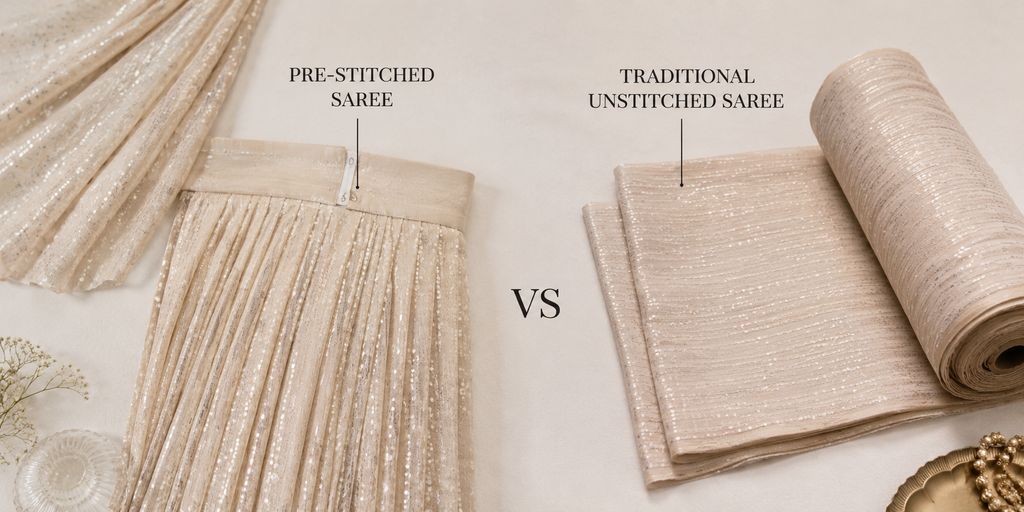
A pre-draped saree — sometimes called a ready-to-wear or pre-stitched saree — is a saree where the pleats, and often the pallu, are permanently stitched into place during manufacturing. Instead of the traditional process of wrapping and pleating 5-6 metres of fabric by hand each time you wear it, a pre-draped saree typically comes as:
- A stitched pleated skirt-like base, which you step into and secure with a hook or drawstring, just like a skirt.
- A separately attached or pinned pallu, which drapes over the shoulder and can be adjusted slightly, but doesn’t need to be pleated from scratch.
The core difference is time and skill. A traditional saree can take anywhere from 15 to 30 minutes to drape well, especially if you’re doing it yourself without help. A pre-draped saree cuts that down to roughly 5 minutes, since the hardest part — even, symmetrical pleating — is already done for you.
Why Pre-Draped Sarees Have Become a Wedding-Season Favourite
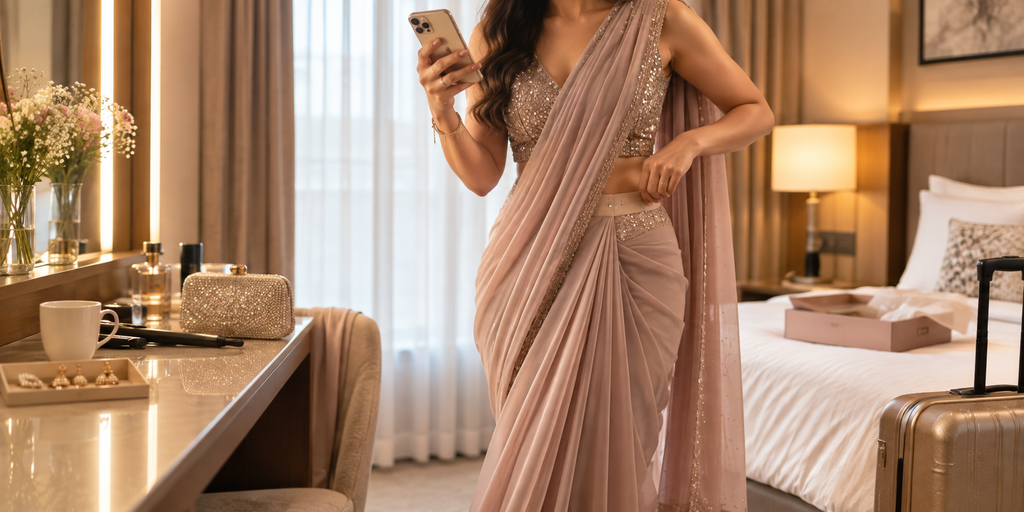
Indian weddings rarely involve just one function anymore — most stretch across 3 to 5 events over several days, and guests are often getting ready alone, in a hotel room, with no one around to help pin a traditional drape. A few reasons pre-draped sarees have picked up so much momentum:
- No draping help required. Traditional saree draping is genuinely difficult to do solo — pre-draped versions remove that dependency entirely.
- Consistent, even pleats every time. Hand-draped pleats can shift or loosen through a long event; pre-stitched pleats hold their shape through hours of sitting, dancing, and moving around.
- Faster turnaround between functions. For multi-day weddings where you’re changing outfits for mehendi, haldi, and sangeet within the same week, saving 20-25 minutes per outfit change adds up fast.
- Beginner-friendly for younger guests. Many younger women simply haven’t learned traditional draping, and pre-draped sarees let them wear the look without needing the skill.
None of this means pre-draped sarees are a “lesser” version of the real thing — high-end designer collections now routinely include pre-draped options specifically because the demand from guests and even brides has grown this much.
Pre-Draped Saree vs Traditional Saree: Which Should You Choose?
| Factor | Pre-Draped Saree | Traditional Saree |
| Time to wear | Around 5 minutes | 15-30 minutes, often needs help |
| Pleat consistency | Fixed and even every time | Varies by draping skill |
| Ease of movement | Very easy, skirt-like fit | Can loosen with movement over time |
| Styling flexibility | Slightly limited, pre-set shape | Fully customisable drape and pleat style |
| Traditional appeal | Modern convenience-first | Fully authentic, hand-draped tradition |
Choose a pre-draped saree if convenience, time, and consistency matter most — especially for guests attending multiple wedding functions. Choose a traditional saree if you want full customisation over the drape style or you’re comfortable draping it yourself (or have help on hand).
Best Occasions to Wear a Pre-Draped Saree During Wedding Season
Pre-draped sarees work well across almost every wedding function, but the styling and fabric should shift depending on the event:
- As a guest at any function — This is where pre-draped sarees genuinely shine, since guests rarely have someone available to help them drape a traditional saree before rushing to a venue.
- Sangeet or reception — A shimmer or sequinned pre-draped saree works beautifully here, holding its shape through dancing far better than a traditional drape would.
- Mehendi or haldi as a guest or family member — A lighter cotton or georgette pre-draped saree keeps things simple and comfortable for daytime functions. If you want the full breakdown of what actually works best across mehendi, haldi, and sangeet specifically, our Mehendi, Haldi & Sangeet complete outfit guide covers colour, fabric, and styling for each function in detail.
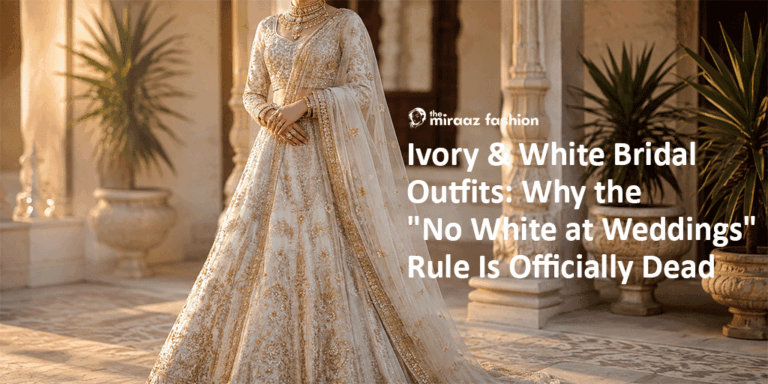
- As a bride for smaller functions — While most brides still choose a lehenga for the main ceremony, a pre-draped saree in an ivory or pastel tone is becoming a popular choice for smaller family functions or the morning-after brunch. If ivory is on your radar for your wedding look overall, our guide on ivory and white bridal outfits explains why this shade has become such a strong 2026 bridal trend.
Essentially, if the function calls for a saree at all, a pre-draped version is almost always a safer, faster choice than attempting a full traditional drape on an already busy wedding day.
Fabric Guide: Which Pre-Draped Saree Fabric Works Best?
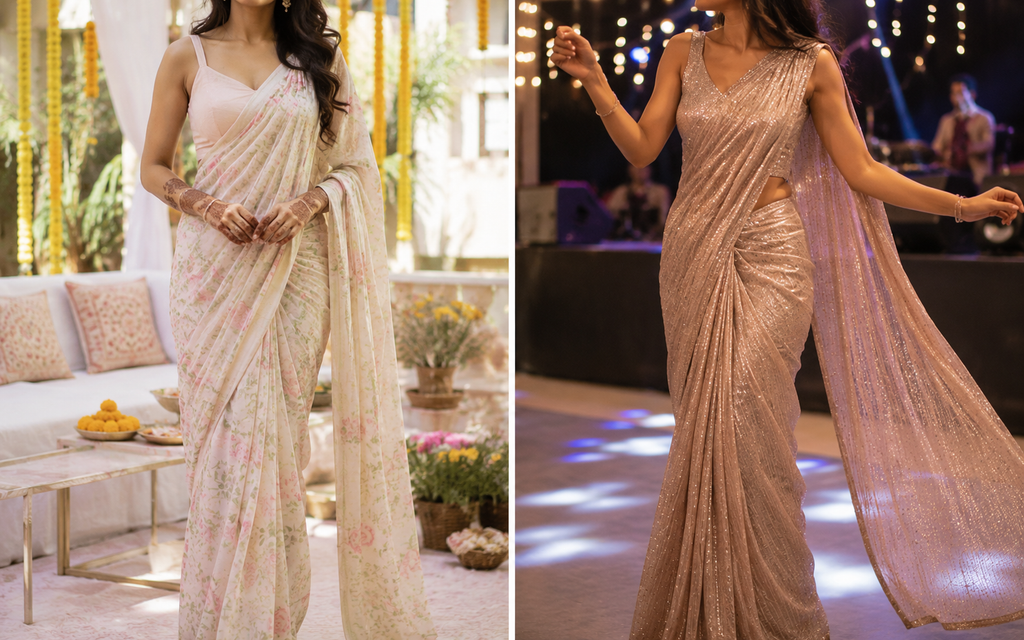
Since the drape itself is already fixed, fabric choice becomes the main lever for how the saree looks and feels through a long event:
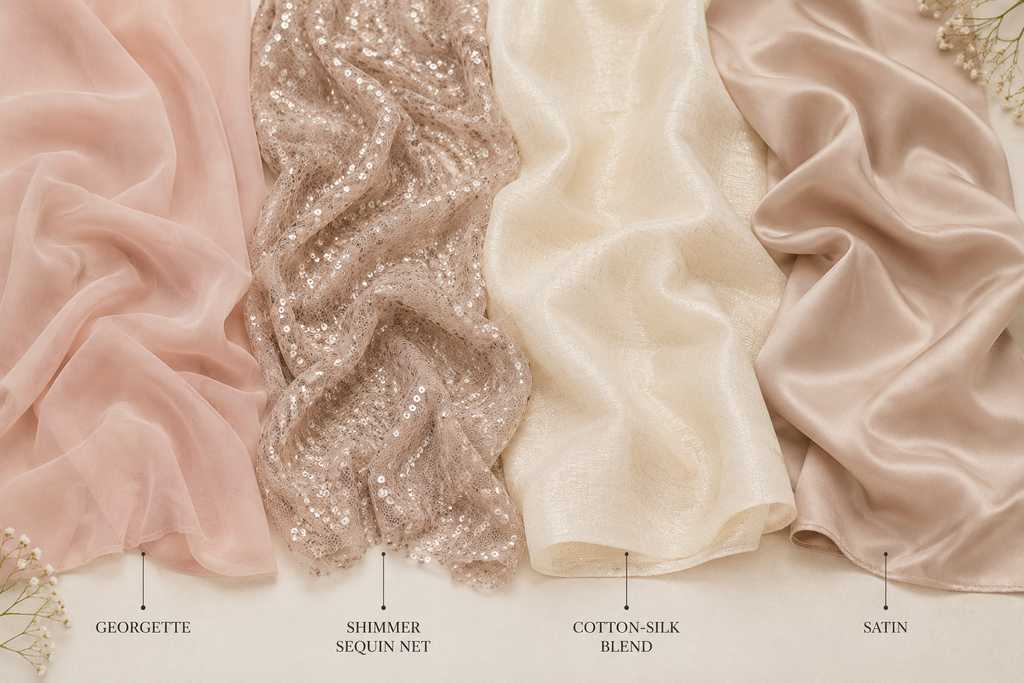
- Georgette — The most popular fabric for pre-draped sarees, since it holds pleats well without adding bulk and drapes smoothly over the body.
- Shimmer or sequin net — Ideal for sangeet and reception, catching light beautifully while still holding its pre-set shape through movement.
- Cotton or cotton-silk blends — Best for daytime functions like mehendi or haldi, where breathability matters more than shine. The same fabric logic that applies to staying cool through long daytime functions is covered in more depth in our guide on cotton kurta sets for monsoon comfort — many of the same breathability principles apply directly to choosing a lighter pre-draped saree fabric for hot or humid wedding days.
- Satin or silk blends — Add structure and a slight sheen, working well for evening functions where you want a more formal finish.
A good rule of thumb: heavier embellished fabrics (like sequin net) suit evening functions best, while lighter breathable fabrics (cotton, georgette) are the smarter pick for anything happening during the day or in warmer weather.
How to Style a Pre-Draped Saree for Different Wedding Functions
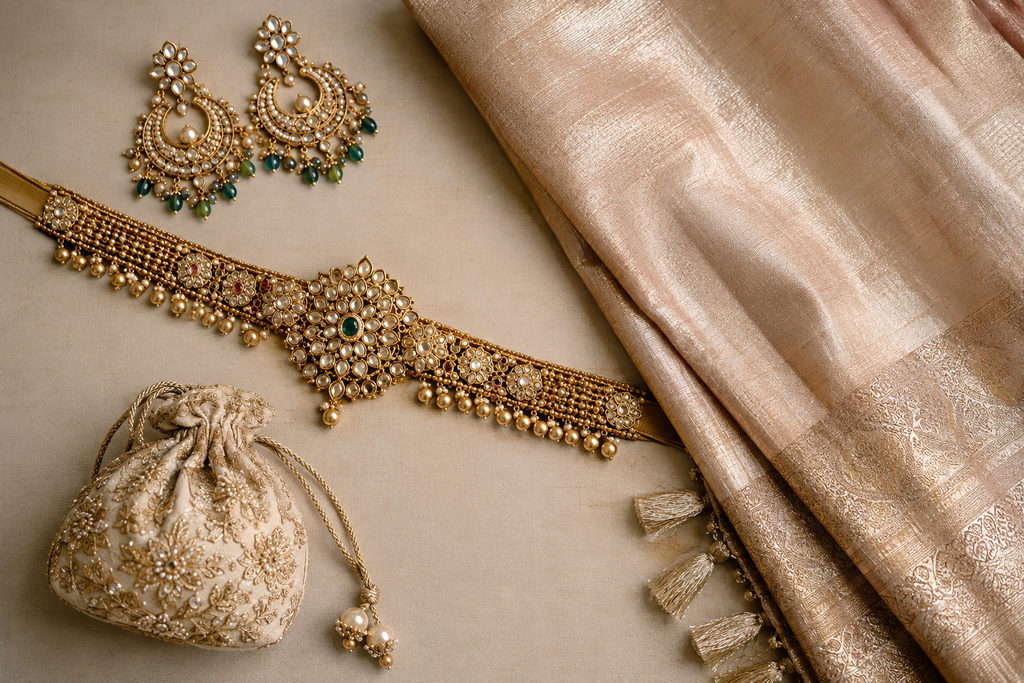
- Daytime functions (mehendi, haldi): Pair with minimal jewellery, a simple blouse, and flat sandals or wedges — comfort matters most here since you’ll likely be sitting for extended periods.
- Evening functions (sangeet, reception): Go bolder with a shimmer pre-draped saree, statement jewellery, and heels with grip for dancing.
- If you also want an alternative to a full saree look for one function: Not every event has to be a saree — some guests prefer switching between a saree for one function and a suit set for another to avoid outfit repetition. Our Lakhnavi suit styling guide is worth a look if you want a traditional-yet-modern option to alternate with your saree choices across a multi-day wedding.
- If a full saree feels too traditional for a modern sangeet: Consider a saree-gown hybrid style, which has grown popular alongside trends like the ombré lehenga — both reflect the same broader 2026 shift toward blending traditional silhouettes with more contemporary, easy-to-wear finishes.
Accessories That Pair Well with Pre-Draped Sarees
- Statement earrings — Since the pallu is already fixed in place, drawing attention upward with bold earrings works well.
- Waist belts or kamarbandhs — A popular styling addition that adds structure and definition at the waistline, especially for georgette or chiffon pre-draped sarees.
- Potli bags or small clutches — Practical and on-trend, since a pre-draped saree’s fitted silhouette doesn’t always allow room for a larger bag.
- Block heels or embellished flats — Since pre-draped sarees are often chosen specifically for ease of movement, footwear should match that same practicality.
Common Mistakes to Avoid With Pre-Draped Sarees
- Buying the wrong size — Unlike a traditional saree, a pre-draped saree is far less adjustable, so getting the correct fit at the waist and length matters more than usual.
- Choosing a stiff fabric for a long event — Fabrics that don’t breathe well can feel uncomfortable over several hours, even if the drape itself is convenient.
- Assuming zero styling is needed — While the pleats are fixed, the pallu often still needs a quick pin or adjustment to sit correctly on your shoulder.
- Overlooking blouse fit — Since the saree drape is fixed, an ill-fitting blouse becomes even more noticeable; getting the blouse tailored well matters just as much as with a traditional saree.
Frequently Asked Questions (FAQ)
Q: How long does it take to wear a pre-draped saree?
Roughly 5 minutes, compared to 15-30 minutes for a traditional hand-draped saree.
Q: Are pre-draped sarees suitable for brides, or only guests?
While most brides still choose a lehenga for the main ceremony, pre-draped sarees are increasingly popular for brides at smaller family functions or post-wedding brunches.
Q: What fabric is best for a pre-draped saree at a daytime wedding function?
Cotton or cotton-silk blends work best for daytime events like mehendi or haldi, since they’re breathable and comfortable for long hours.
Q: Can a pre-draped saree be worn for a sangeet or reception?
Yes — shimmer or sequin net pre-draped sarees are especially popular for these evening functions since they hold their shape well through dancing.
Q: Is a pre-draped saree less “authentic” than a traditional saree?
Not at all — it’s simply a convenience-focused alternative; many designer bridal collections now include pre-draped options specifically due to guest and bridal demand.