
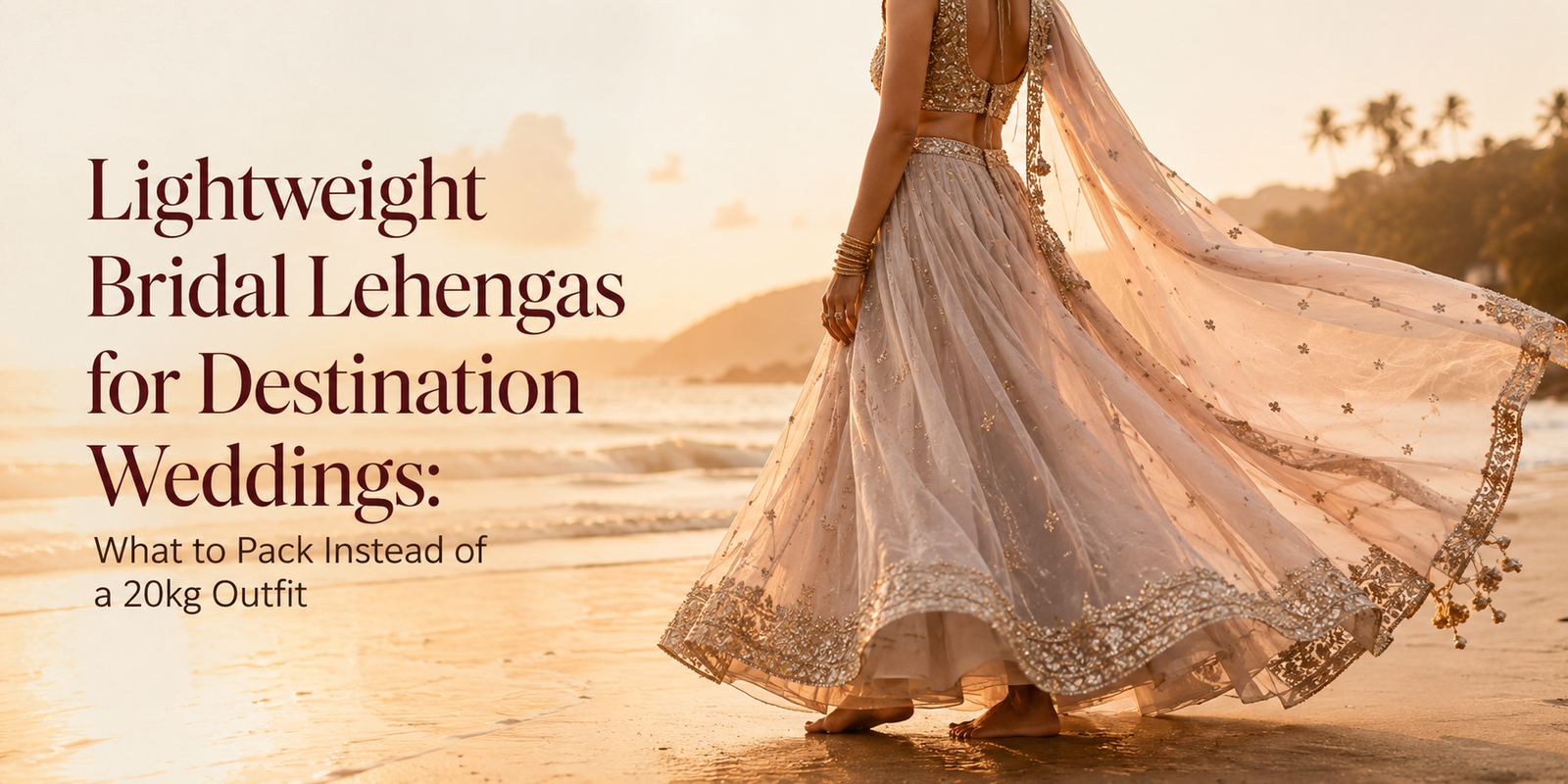

Quick Answer: For destination weddings, brides are moving away from heavily embellished 15-20kg lehengas toward lightweight organza, georgette, and net options with strategic embroidery placement — outfits that weigh 3-6kg but still photograph as rich and bridal. The trick is concentrating embellishment on the border, blouse, and dupatta rather than covering the entire skirt, which cuts weight dramatically without cutting the “wow” factor.
Destination weddings solve a lot of problems — smaller guest lists, better weather control, a built-in vacation for everyone involved — but they create one very specific new problem: how do you pack, travel with, and actually wear a bridal lehenga that traditionally weighs as much as a checked suitcase? A heavily embellished bridal lehenga can easily weigh 15-20kg once you account for zari work, stonework, and layered fabric. For a beach wedding in Goa, a palace wedding in Udaipur, or an international destination, that’s simply impractical. This guide covers how to choose a lightweight bridal lehenga that still looks fully bridal, which fabrics and embellishment styles to prioritise, and how to actually travel with it without a nightmare at baggage claim.
Why Are Destination Wedding Brides Choosing Lightweight Lehengas?
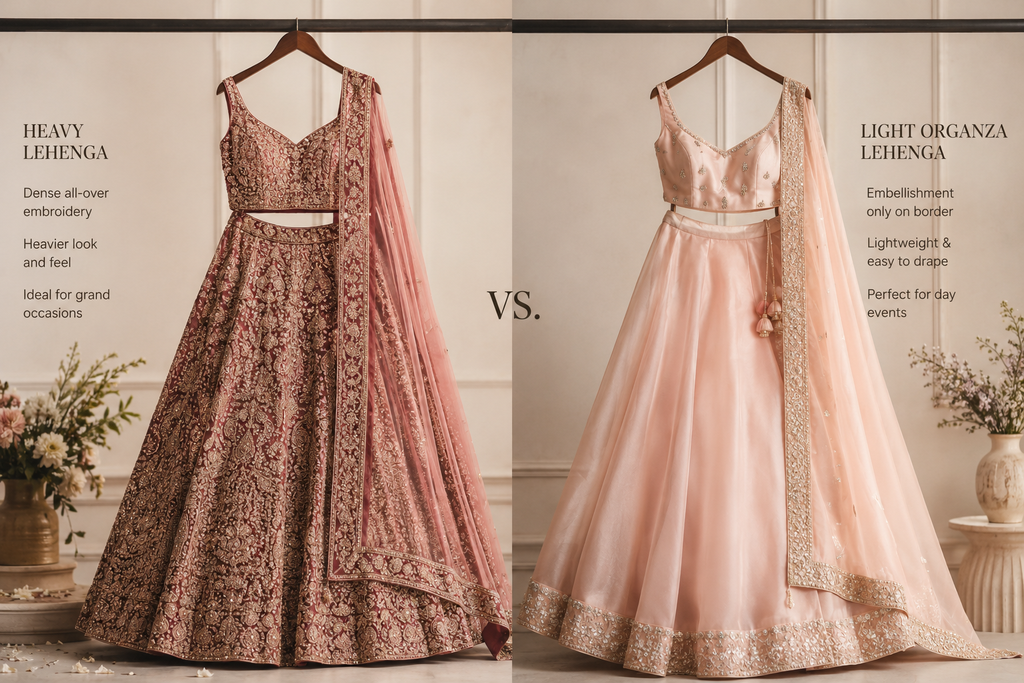
A traditional heavily embellished bridal lehenga isn’t just expensive — it’s genuinely difficult to travel and move in, which matters more for destination weddings than for a hometown wedding where the outfit only needs to survive a short car ride to the venue.
- Airlines have real baggage limits. Most international flights cap checked baggage between 20-30kg total, and a single heavy lehenga can eat up half that allowance on its own, before you’ve packed anything else for a multi-day event.
- Outdoor venues demand more comfort. Beach weddings, garden ceremonies, and hilltop venues often mean standing, walking on uneven ground, or dealing with heat and humidity — a heavy lehenga makes all of that harder.
- Multiple outfit changes across the trip add up fast. Destination weddings typically span 3-5 days of functions, meaning brides are already packing several outfits; a lighter primary lehenga leaves more baggage room for everything else.
- Comfort directly affects how a bride looks in photos. A bride who’s visibly uncomfortable, sweating, or struggling to move under a heavy outfit doesn’t photograph as naturally as one who’s comfortable enough to actually enjoy the day.
None of this means brides are compromising on looking bridal — the shift is toward smarter embellishment placement rather than skipping embellishment altogether.
Best Lightweight Fabrics for Bridal Lehengas
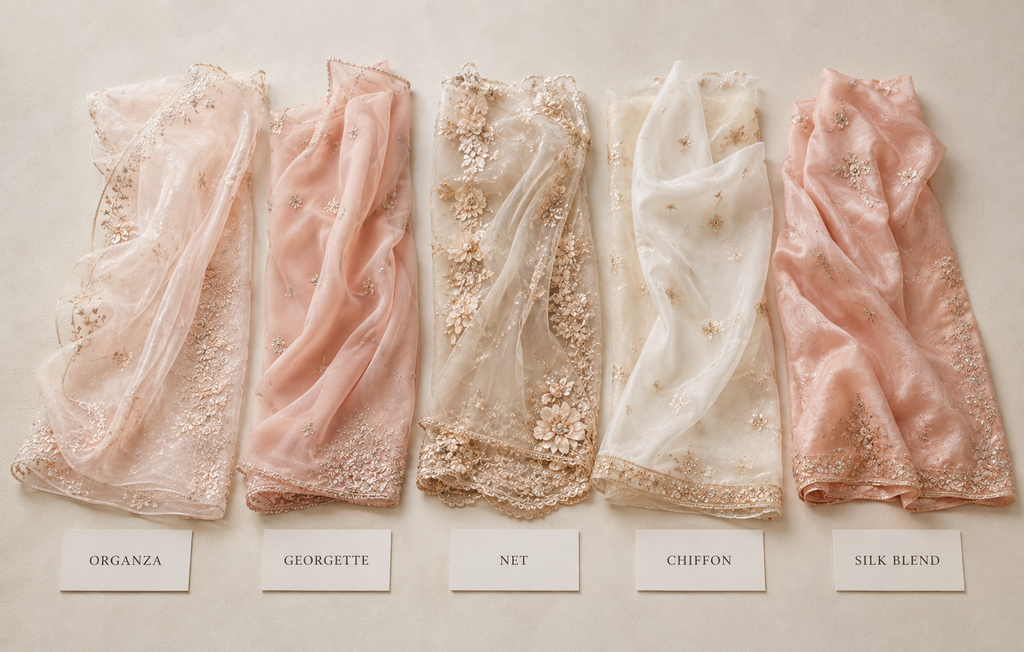
The fabric is the single biggest factor in how much a lehenga weighs, far more than the embellishment itself in most cases.
- Organza — One of the lightest bridal fabrics available, with a natural sheen that reads as rich even with minimal embellishment. A well-made organza lehenga can weigh as little as 2-3kg.
- Georgette — Slightly heavier than organza but still significantly lighter than silk or velvet bases, and drapes beautifully for outdoor, breezy venues.
- Net — Commonly used as an overlay rather than the base fabric, adding texture and a layered look without much added weight.
- Chiffon — Extremely lightweight and flowy, best suited to softer, less structured bridal looks rather than heavily traditional silhouettes.
- Silk blends (used sparingly) — Full silk lehengas are heavy, but a silk blend used only for the blouse or a fitted panel can add richness without weighing down the entire outfit.
A simple rule of thumb: if a fabric feels stiff or dense when you rub it between your fingers in-store, it’s going to add significant weight once tailored into a full lehenga skirt. Lighter, flowier fabrics that move easily are almost always the lower-weight choice.
Smart Embellishment: How to Look Rich Without the Weight
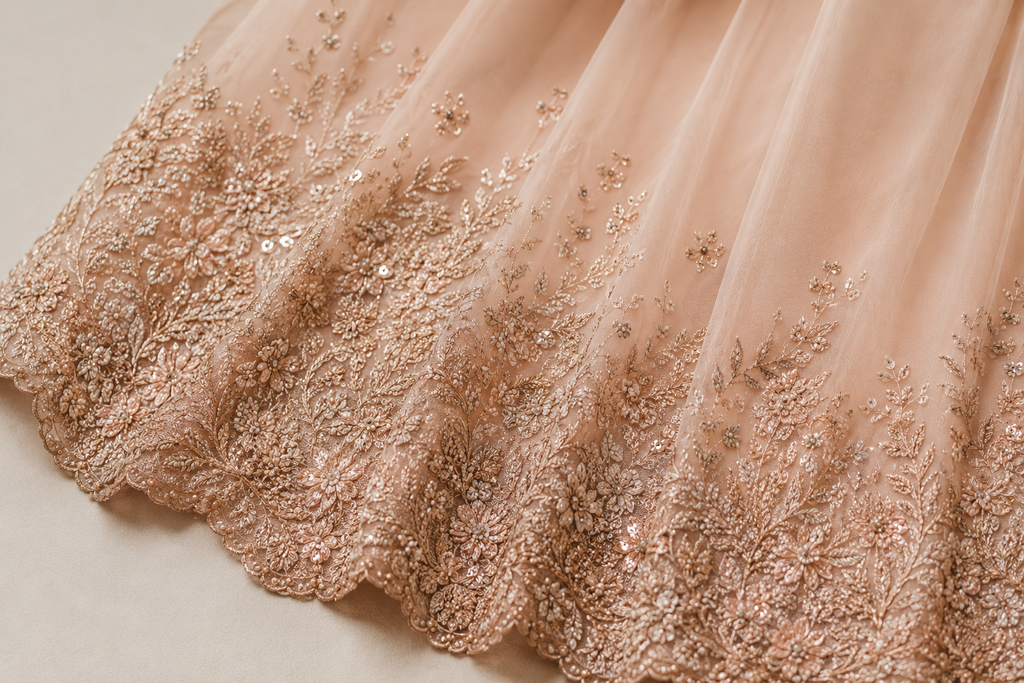
The biggest misconception about lightweight bridal lehengas is that “lightweight” means “plain.” In reality, it’s about where the embellishment goes, not how much of it exists.
- Concentrate work on the border and hemline. A heavily embroidered border with a plain or lightly worked body gives the illusion of a fully embellished lehenga while keeping the bulk of the fabric light.
- Let the blouse carry the richness. A heavily embellished blouse paired with a simpler skirt shifts visual weight (literally and figuratively) upward, which also photographs beautifully in close-up shots.
- Use a statement dupatta instead of an all-over embellished skirt. A dupatta with dense embroidery or sequin work draws attention without adding significant weight to the main outfit.
- Choose sequins and thread work over heavy stonework. Sequins and resham thread embroidery add shine and texture at a fraction of the weight of kundan, stone, or mirror work.
- Ask for double-layered net instead of triple-layered silk. Layering with lighter fabrics like net or organza creates fullness and volume without the density of heavier fabric layers.
This is very similar in logic to how gradient bridal fabrics have gained popularity for their visual richness without needing dense embellishment — the ombré lehenga trend works especially well for destination weddings for exactly this reason, since the colour transition itself creates visual interest without requiring heavy embroidery to look bridal.
Lightweight Lehenga vs Traditional Heavy Lehenga: Quick Comparison
| Factor | Lightweight Lehenga | Traditional Heavy Lehenga |
| Average weight | 3-6kg | 12-20kg |
| Best suited for | Destination, outdoor, multi-day weddings | Single-venue, indoor, traditional ceremonies |
| Comfort for long wear | High, easier to move and sit in | Lower, can feel restrictive over hours |
| Packing/travel ease | Fits easily within baggage limits | Often needs separate bag or courier |
| Visual richness | Achieved through smart placement | Achieved through dense, full-coverage work |
Quick Answer: Choose a lightweight lehenga if you’re travelling for your wedding, dealing with outdoor heat, or want more comfort across multiple days of functions. A traditional heavy lehenga still works well for single-location, indoor, formally structured weddings where travel and mobility aren’t major concerns.
How to Pack a Bridal Lehenga for a Destination Wedding
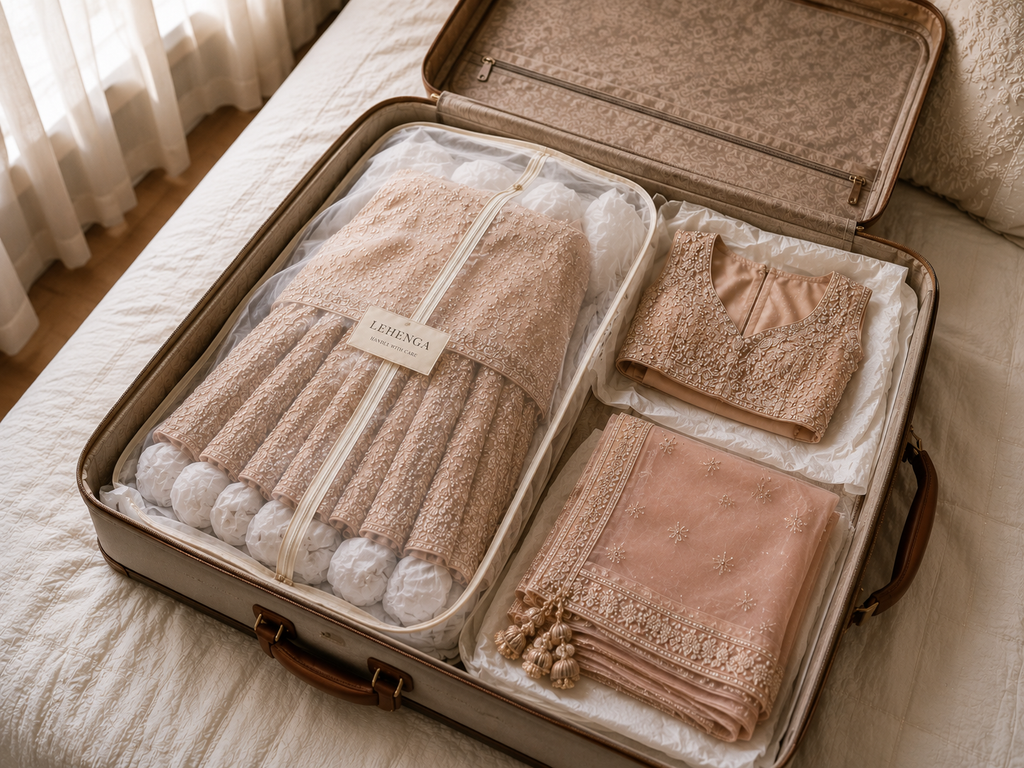
Even a lightweight lehenga needs careful packing to avoid creasing, snagging, or damage during travel.
- Use a dedicated garment bag, not a folded suitcase pack. A breathable garment bag prevents the fabric from crushing and protects embellishment from snagging against other items.
- Stuff the pleats with tissue paper. Acid-free tissue paper inside each pleat helps the skirt hold its shape and prevents deep, hard-to-remove creases during transit.
- Pack the blouse and dupatta separately, flat. These pieces often carry the most embellishment, so keeping them uncrushed by other luggage matters more than for the lighter skirt.
- Carry it as hand luggage if the airline allows. Many brides choose to carry the primary bridal outfit on board rather than risk checked-baggage handling, especially for international destination weddings.
- Steam, don’t iron, on arrival. Direct heat from an iron can damage embellishment or delicate fabric; a garment steamer is the safer option for removing travel creases once you’ve reached the destination.
Which Wedding Functions Actually Need a Full Lehenga?
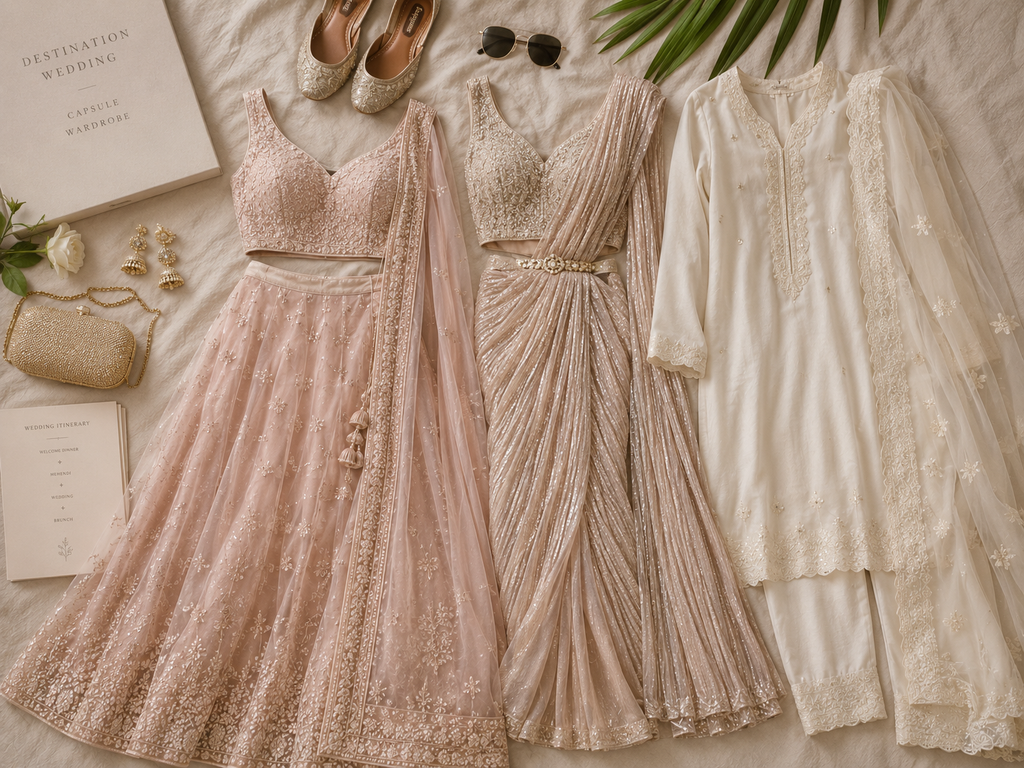
Not every function across a destination wedding week needs a full heavy lehenga — being selective about where you use your “big” outfit budget helps significantly with both weight and packing.
- Main wedding ceremony: This is where a fuller, richer lightweight lehenga makes sense — even if it’s lighter than tradition, this is the outfit that should carry the most visual weight of the trip.
- Sangeet or welcome dinner: A shimmer pre-draped saree can work just as well here as a second lehenga, and takes up far less packing space. Our guide on pre-draped sarees for weddings covers exactly this kind of easy, travel-friendly alternative.
- Mehendi or daytime functions: A lightweight suit set or anarkali is often more practical than a second lehenga, especially for outdoor, hot-weather destination venues. Our Mehendi, Haldi & Sangeet outfit guide breaks down colour and fabric choices specifically suited to these daytime events.
- Post-wedding brunch or smaller gatherings: A simple ivory or pastel suit works well here rather than packing a third heavy outfit — our guide on ivory and white bridal outfits has options that work particularly well for these lower-key events. If you’d rather go the suit route entirely for one of the smaller functions, the Lakhnavi suit styling guide is a useful reference for a traditional-yet-modern option.
Thinking of your destination wedding wardrobe as “one true lehenga plus lighter alternatives” rather than “multiple heavy lehengas” is the single biggest change that makes packing manageable.
Common Mistakes Brides Make When Choosing a Destination Wedding Lehenga
- Ordering the same heavy lehenga they’d wear for a hometown wedding. Destination venues, weather, and logistics are different enough that outfit choices should adjust accordingly.
- Not checking baggage weight limits before ordering. It’s worth confirming your airline’s checked baggage allowance before committing to a specific outfit weight.
- Skipping a trial wear before travel. Wearing the lehenga for at least an hour before the trip helps confirm comfort, since destination wedding days often involve more standing and walking than typical indoor venues.
- Assuming lightweight always means less bridal. As covered above, smart embellishment placement can make a 4kg lehenga look just as rich as a 15kg one in photographs.
- Not accounting for climate. A heavier fabric that seems fine in air-conditioned trial rooms can feel completely different in outdoor heat or humidity at the actual destination.
Frequently Asked Questions (FAQ)
Q: How much does a typical bridal lehenga weigh? A: A traditional heavily embellished bridal lehenga can weigh 12-20kg, while a lightweight version using organza or georgette with strategic embellishment typically weighs 3-6kg.
Q: Can a lightweight lehenga still look rich enough for the main wedding ceremony? A: Yes — by concentrating embroidery on the border, blouse, and dupatta rather than the entire skirt, a lightweight lehenga can look just as visually rich as a heavier one.
Q: What’s the best fabric for a destination wedding lehenga? A: Organza is generally the top choice, since it’s one of the lightest bridal fabrics available while still holding a natural sheen and structure.
Q: Should I check-in or carry my bridal lehenga while flying? A: Many brides prefer to carry it as hand luggage, especially for international destination weddings, to avoid any risk of damage or loss during checked-baggage handling.
Q: Do I need a separate lehenga for every function at a destination wedding? A: No — most brides use one fuller lightweight lehenga for the main ceremony and switch to lighter alternatives like a pre-draped saree or suit set for other functions to save on both weight and packing space.